Roof Maintenance
El Niño 2026-27 Roof Prep Guide for Southern California
October 20, 2026 · Chaparosa Roofing · 15 min read
Forecast figures updated Oct. 20, 2026, from NOAA’s Climate Prediction Center (Oct. 8, 2026 discussion).
In its Oct. 8, 2026 discussion, NOAA’s Climate Prediction Center said El Niño "continues to strengthen, with a strong-to-very strong El Niño likely through January-March 2027 (remaining greater than an 83% chance)." NOAA also gives an 83% chance that October through December brings an event stronger than any El Niño since 1950. On Sept. 21, 2026, Gov. Gavin Newsom declared a statewide emergency, citing the likelihood of heavy rain, strong winds and flooding.
None of that means your roof is going to fail. It does mean this is a good year to take a look before the rain does. Chaparosa Roofing has cared for Southern California roofs from our home base in Apple Valley since 1969, and this guide is the honest checklist we’d give a neighbor: what the forecast says, what to check, and when to call a pro.
Book my free storm inspection · Call (760) 240-0088
No cost, no obligation, photo report of exactly what we find, and a written estimate.
After the wind, before the rain: a quick roof check
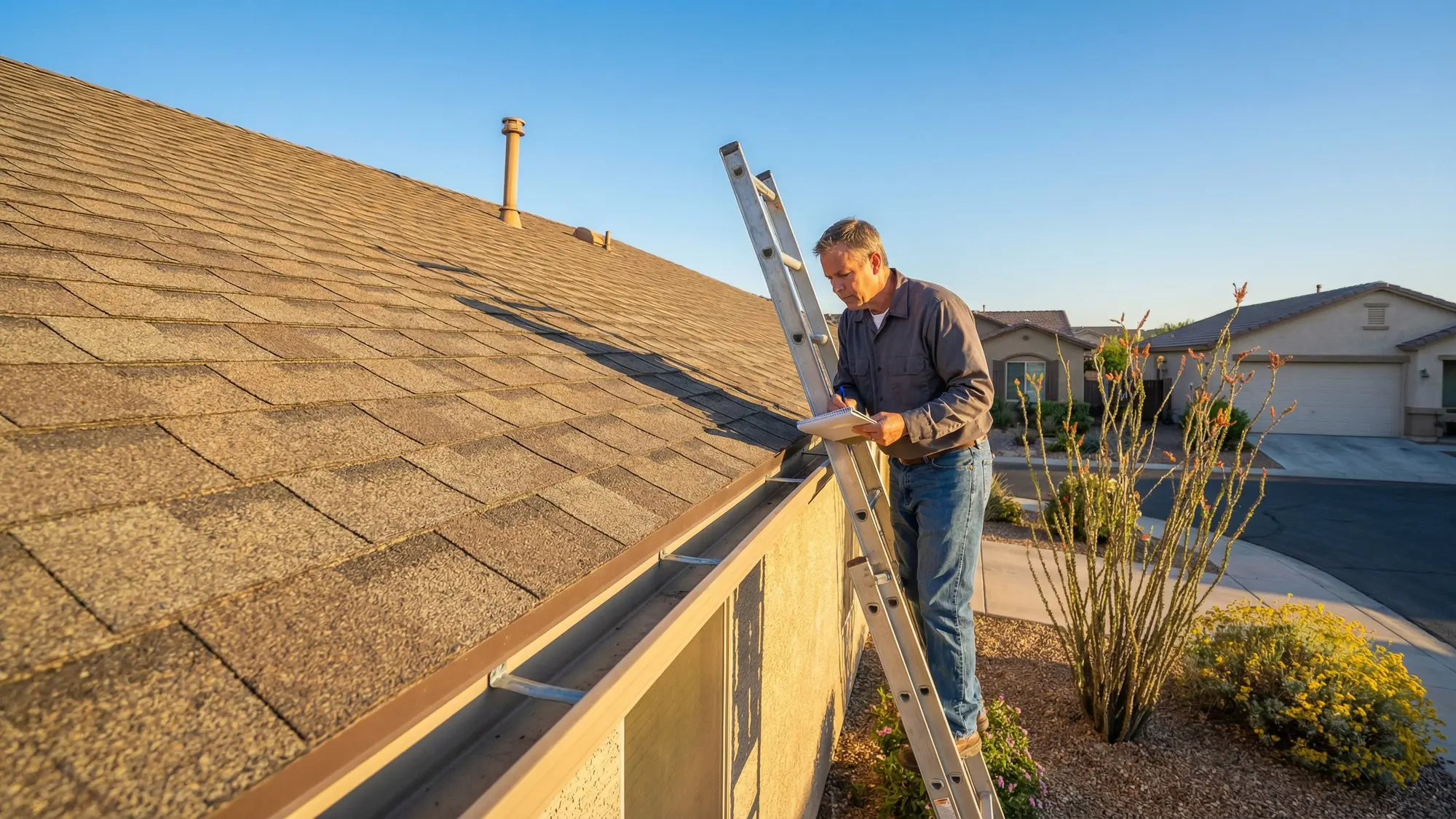
From the yard or sidewalk, look for lifted, cracked or missing shingles or tiles, especially along edges and ridges.
Look for branches, palm fronds and other debris on the roof and in the gutters. Clear gutters only if you can do it safely from a sturdy ladder on dry ground.
Check flashing, vents and ridge caps for anything loose, bent or out of place.
In the attic, use a flashlight to look for daylight coming through, damp insulation or new stains, and check ceilings for fresh spots.
Take dated photos of anything you find, inside and out, for your insurance claim.
Don’t climb onto a wet or windy roof. If something looks wrong, call a pro.
Not sure what you’re seeing? Chaparosa offers a free, no-obligation storm inspection with a photo report and written estimate, usually within a few days. Call (760) 240-0088.
Quick checklist: get your roof ready for El Niño
Book a professional roof inspection while it’s still dry.
Fix cracked flashing and broken or slipped tiles and shingles.
Clean gutters and downspouts, and make sure they’re firmly attached.
Check that water drains away from the house. Test yard drains with a hose.
Trim branches that hang over the roof.
On flat roofs, clear drains and scuppers and look for low spots.
Take dated photos of your roof and attic for your insurance records.
Save a licensed roofer’s number before you need it: (760) 240-0088.
Want a second set of eyes on it? Book my free storm inspection or call (760) 240-0088.
My roof leaked during Rachel. What should I do now?
Check for the damage Rachel left behind: standing water on flat roofs, slipped or cracked tiles, clogged drains and scuppers, and new ceiling stains. If it’s still leaking, move belongings, put down a bucket and stay out from under any bulging ceiling. Never poke a hole in it. Then call (760) 240-0088.
The remnants of Tropical Storm Rachel dropped 1.15 inches of rain on Palm Springs and 1.71 inches on Thermal on Oct. 10-11, according to National Weather Service totals reported by KESQ. Coachella Valley roofers told KESQ the leak calls involved flat roofs holding water, slipped or broken tiles exposing the underlayment, drains clogged with palm debris, and repairs from 2023’s Tropical Storm Hilary failing early.
Leaking now? Call anytime: (760) 240-0088. We’ll get your roof protected as fast as we can.
Even if the drips have stopped, El Niño is still building. A free storm inspection, usually within a few days, can catch what Rachel loosened before the next storms. Book my free storm inspection.
How strong is the 2026-27 El Niño?
Strong to very strong, possibly historic. In its Oct. 8, 2026 discussion, NOAA’s Climate Prediction Center said El Niño continues to strengthen and gave a greater than 83% chance of a strong-to-very strong El Niño through January-March 2027, plus an 83% chance that October through December brings an event stronger than any since 1950.
El Niño is a warming of Pacific Ocean waters that tends to steer more storms toward Southern California. NOAA expects this one to keep strengthening through the end of the year. It’s also careful to say the chances of typical El Niño impacts are "larger, though not guaranteed." That’s a reason to prepare, not to panic. We’ll refresh this page after each monthly NOAA update.
Will El Niño bring rain to Southern California this year?
Probably more than usual, but it isn’t guaranteed. NOAA gives a greater than 83% chance of a strong-to-very strong El Niño through March, which tilts Southern California toward a wetter, stormier season. Still, strong El Niños vary: 1997-98 soaked Los Angeles, while 2015-16 finished well below normal.
Either way, the practical step is the same: inspect first, then decide.
How much rain did past strong El Niños bring?
A lot, but not every time. Downtown Los Angeles recorded 31.25 inches of rain in the 1982-83 season and 31.01 inches in 1997-98, more than double its normal of about 14.25 inches. The strong 2015-16 El Niño, by contrast, brought only 9.65 inches. That’s why forecasters talk about odds, not guarantees.
Season | Downtown LA rain | Normal |
|---|---|---|
1982-83 | 31.25 in | about 14.25 in |
1997-98 | 31.01 in | about 14.25 in |
2015-16 | 9.65 in | about 14.25 in |
Source: Los Angeles Almanac, downtown Los Angeles seasonal rainfall (July through June). The normal is the 30-year average, updated May 2021.
What it could mean where you live
No one can predict how much rain will fall on your street. The governor’s emergency declaration, as reported by the Los Angeles Times, points to heavy rainfall, strong winds, mountain snow, high waves, flooding, landslides and power outages. Here’s what that means for roofs across our area.
High Desert. In Apple Valley, Hesperia, Victorville, Phelan, Lucerne Valley and Barstow, roofs spend most of the year baking in sun and wind and rarely face weeks of rain. Dried-out sealant, cracked flashing and brittle shingles can handle a passing shower, then give way in a long, wet stretch.
Mountain communities. In Big Bear Lake and Wrightwood, the concern is snow load and ice. Ice at the eaves can back water up under the roofing, and heavy snow adds weight. Clear gutters and check any spot that has leaked before.
Inland Empire. In Riverside, Temecula, Corona, Hemet and Menifee, many homes have older concrete tile. The tile often looks fine from the street, but the underlayment beneath it is what keeps water out, and it can wear out long before the tile does.
Coachella Valley. In Palm Springs and Palm Desert, years of intense sun crack the sealants around vents, skylights and rooftop equipment. Flat and foam roofs are common here, and they depend on clear drains and intact coatings.
San Diego County. From Escondido and North County to San Diego and South County, coastal storms bring wind-driven rain that can push water sideways under tiles and flashing. Check flashing, ridge caps and loose tiles before winter.
Should I get my roof inspected before El Niño?
Yes, if your roof is older, has leaked before, or hasn’t been checked in a few years. One Southern California roofer quoted by the Los Angeles Times suggests an inspection if a roof is over 12 years old. Inspecting now, while it’s dry, lets small fixes happen before storms and before roofers’ calendars fill up.
A cracked piece of flashing is a simple repair on a sunny afternoon and a much bigger problem in a week of rain. We recommend a roof inspection every year, plus one after any major storm.
Signs your roof may not survive a wet winter
Spot any one of these from the ground? It’s worth a closer look before the weather turns.
Cracked or slipped tiles. Cracked, curling or out-of-place tiles and shingles leave gaps for water.
Granules in the gutters. Sandy grit at the downspouts means shingles are wearing thin.
Stains in the attic. Water stains, or daylight showing through, mean moisture is already getting in.
Cracked flashing. The metal around vents, skylights and chimneys is a common place for leaks to start.
Sagging gutters. Clogged or pulling-away gutters push water back under the roof’s edge.
Soft or sagging spots. A dipping roofline or soft decking can point to water damage underneath.
Age. A roof more than 12 years old.
Past leaks. Even a patched leak deserves a check.
What does a pre-storm roof inspection check?
A good pre-storm inspection checks flashing around vents, chimneys and skylights; cracked, slipped or missing tiles and shingles; worn underlayment; gutters and downspouts; attic stains or daylight; and, on flat roofs, drains, seams and low spots where water ponds. You should get photos of what was found and a written estimate before any work starts.
Here’s how a Chaparosa storm inspection works:

Book your inspection. Call (760) 240-0088 or request a time online.
We inspect and photograph. Our crew checks every vulnerable point and shows you real photos. No jargon, no scare tactics, just the facts.
Get a written estimate. If repairs are needed, you get a written estimate up front. If your roof is in good shape, we’ll say so.
How do I prepare my roof for El Niño? (Step by step)
Start with a professional inspection, then fix cracked flashing, broken or slipped tiles and worn seals. Clean gutters and downspouts and make sure water drains away from the house. Trim branches over the roof. On flat roofs, clear drains and scuppers. Photograph your roof and attic now so you have a dated record for insurance.
Jump to your roof type below.
Shingle roofs
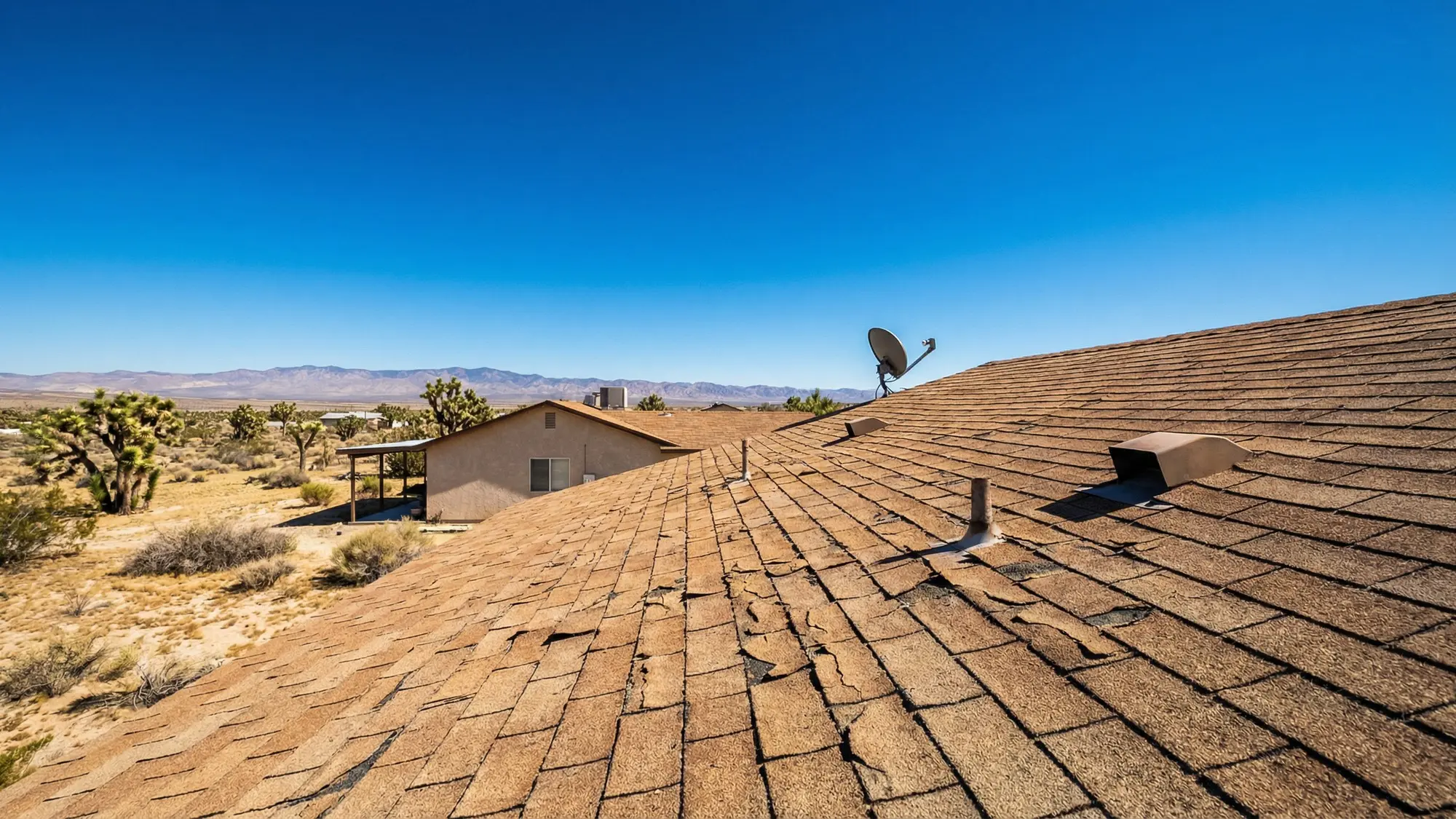
Look for lifted, curled or cracked shingles, especially along ridges and edges where wind catches them. Heavy granule loss means shingles are losing their protective surface. Nail pops, where a nail backs out and lifts the shingle above it, let water in during wind-driven rain. Most of these are straightforward roof repairs when caught early.
Tile roofs (concrete and clay)
Slipped or broken tiles are easy to spot. The bigger question on an older tile roof is the underlayment, the waterproof layer under the tile that actually keeps water out. It wears out long before the tile does and is a common reason for tile roof leaks in heavy rain.
You can’t see underlayment from the ground, and walking on tile can crack it, so leave this one to a roofer. Learn more about concrete tile and clay tile roofs.
Flashing, vents and skylights
Flashing is the metal that seals the joints around vents, chimneys, skylights and walls. In the desert sun, flashing and its sealant dry out and split, which makes them a common place for leaks to start. Vent boots, the rubber collars around plumbing vents, crack the same way.
Gutters, downspouts and drainage
Clean gutters and downspouts and make sure they’re firmly attached. Downspouts should send water away from the house, not against the foundation. The Los Angeles Times suggests a simple yard-drain test: run a hose into the drain and make sure the water comes out at the curb. If your gutters sag or overflow, see our gutter installation page.
Trees and debris
Trim branches that hang over the roof. In strong winds they can scrape shingles or break tiles, and their leaves clog gutters and roof valleys. For large limbs near the roof or power lines, call a tree professional.
Solar panels on your roof
Panels hide part of the roof, so problems underneath can go unnoticed. Leaks often start at old mounting penetrations, where the racking attaches to the roof. If the roof under your panels needs work, Option One Solar, Chaparosa’s sister company, removes and reinstalls the panels while Chaparosa handles the roof. See Roof + Solar and Option One Solar customer support.
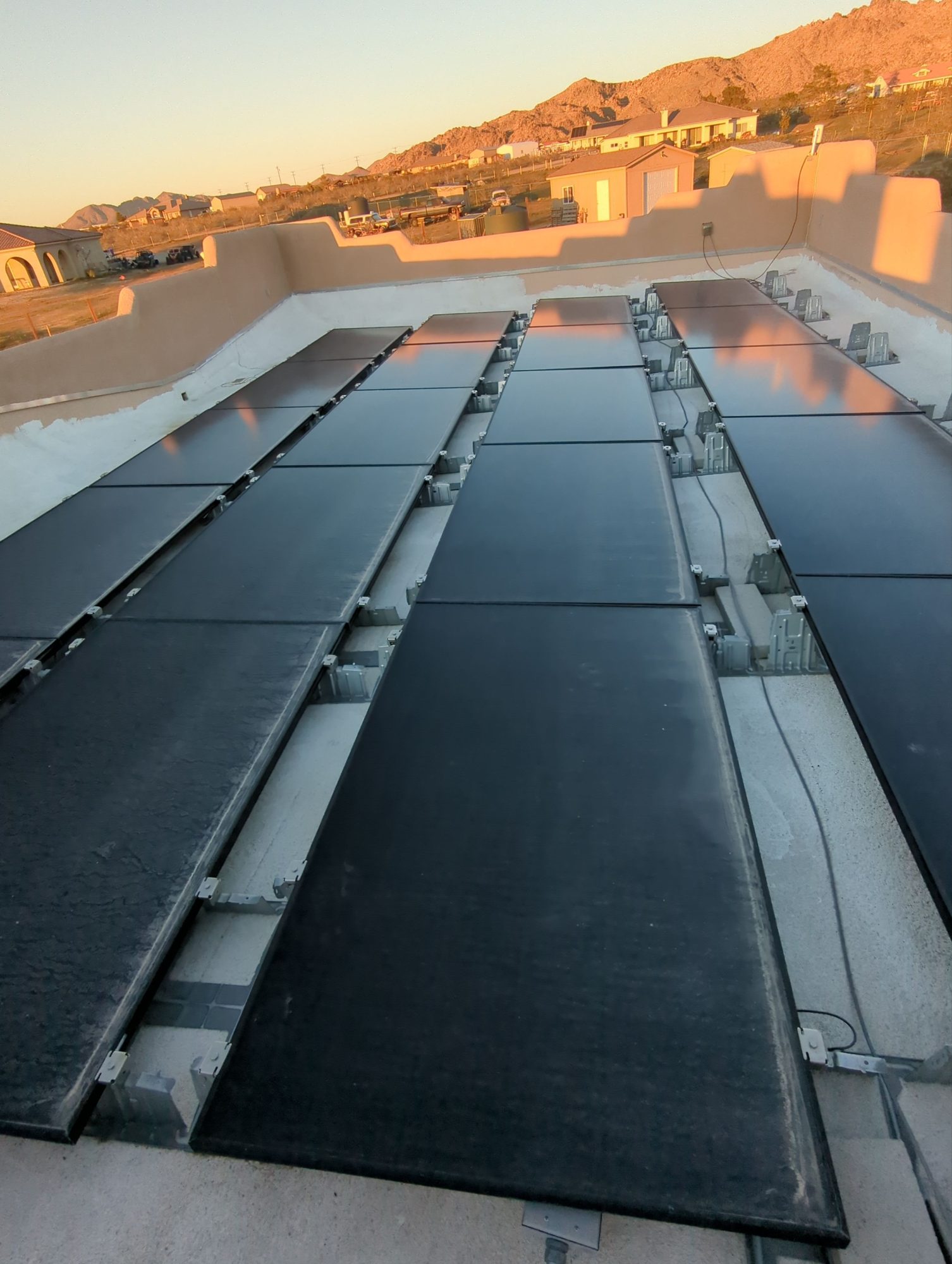
The governor’s emergency declaration also warns of power outages. If backup power is on your list, Option One Solar explains home battery storage.
Flat and commercial roofs: extra steps before El Niño
Flat roofs don’t shed water the way sloped roofs do, so a long, wet season is harder on them than a single storm. Water that can’t drain sits, finds the weakest seam and keeps working on it between storms.
Commercial pre-storm inspections are free, with the same checklist, photo report and written estimate as homes. If you own or manage a building with a flat roof, check these before the rainy season:
Ponding water. Low spots where water sits after rain strain seams and coatings.
Drains and scuppers. Clear debris from roof drains and scuppers, the openings that drain water off the roof edge.
Seams. Check TPO and modified bitumen seams for lifting or splits.
Parapet flashing. Where the roof meets parapet walls is a common entry point for wind-driven rain.
Coatings. Look for cracked, peeling or worn-through roof coating, especially around rooftop equipment.
See our flat roofing and commercial roof repair pages.
Managing a commercial property? Book a free storm inspection or call (760) 240-0088.
Insurance: document your roof before the storms
Does homeowners insurance cover El Niño roof leaks?
It depends on your policy. Sudden storm damage is often covered, but wear and tear and poor maintenance usually aren’t, and consumer advocates warn that many insurers have reduced or capped water-damage coverage. Most homeowners policies don’t cover flood damage. Read your policy now, know your deductible, and keep dated photos of your roof’s condition.
We’re roofers, not insurance agents, so ask your agent or insurer about coverage.
Take dated photos and video now
The Los Angeles Times, drawing on advice from the consumer group United Policyholders, suggests these steps before the rainy season:
Know your deductible now, not after a leak.
Watch for reduced water-damage coverage. Many insurers have cut it back or added caps on payouts.
Get a flood insurance quote. Most homeowners policies don’t cover flood damage, according to FEMA’s FloodSmart.gov.
Record a walkthrough video of your home and belongings.
Add dated photos of your roof from the ground and of your attic, and keep any inspection report with your insurance papers. Ask for a dated condition report when you book.
Storm damage vs. wear and tear
Insurers generally treat sudden storm damage differently from damage caused by age and poor maintenance. That’s one more reason to fix small problems now and keep a record that you did. Read our roof insurance claims guide for more.
Got a non-renewal notice?
If your insurer has sent a non-renewal notice, talk with your agent or broker about your options before the rainy season.
My roof is leaking in the storm. Now what?
Move belongings out of the way, put down a bucket, and stay out from under any ceiling bulge. Take photos. Don’t climb on a wet roof. Call Chaparosa at (760) 240-0088. During heavy rain, crews can usually only tarp the roof temporarily, so permanent repairs happen once it dries out.
Safety first. Stay off the roof, and keep water away from outlets and light fixtures.
Temporary vs. permanent. A Southern California roofer quoted by the Los Angeles Times noted that during heavy rain, crews may only be able to tarp a roof. A tarp buys time; the real repair happens once the roof dries out. Learn more about emergency roof repair or read our guide to emergency roof repair.
Leaking now? Call anytime: (760) 240-0088. We’ll get your roof protected as fast as we can.
Is it too late to replace my roof before El Niño?
Not necessarily, but time is tight. A full replacement needs a permit, materials and a dry-weather window, and in much of Southern California replacing more than half a sloped roof also triggers California’s cool-roof energy rules. If your roof can’t be replaced in time, targeted repairs now can often carry it through the season.
Repair or replace? An inspection is the best way to find out, so book early, before the rains. Compare the options in our roof repair vs. replacement cost guide, or learn about roof replacement.
Permits. A replacement needs a building permit from your city or county.
The cool-roof rule. Under California’s 2025 Energy Code (Title 24), a residential reroof that replaces more than 50% of the roof must meet cool-roof requirements in certain climate zones. For sloped roofs, that’s climate zones 4 and 8 through 15, which covers most of our inland service area. There are exceptions, so ask your roofer what applies to your home. Learn more about cool roofs.
Paying for it. If cost is part of the decision, see our financing options.
How to choose a roofer before storm season
How do I check that a roofer is licensed?
Look up the company on the Contractors State License Board (CSLB) website using its license number or name. Make sure the license is active, that the name matches the company you’re dealing with, and check for complaints or disciplinary actions. Be wary of storm chasers who knock on doors after bad weather and ask for large deposits.
Use the CSLB license lookup. Get a written estimate before work starts, and don’t let headlines rush your decision. For more tips, see how to select the right roofing contractor.
About Chaparosa Roofing. We’ve been based in Apple Valley since 1969. Chaparosa Roofing, Inc. holds CA License #874120, with 57+ years in business, 5,000+ roofs completed and a 4.9 Google rating (150+ reviews). We’re an Owens Corning Platinum Preferred Contractor, the top 1% of Owens Corning contractors nationwide.
FAQs
When will El Niño storms hit Southern California?
No one can name exact dates, and we’d be wary of anyone who does. Storms linked to the strengthening El Niño already damaged the coast over Labor Day weekend 2026, according to the Los Angeles Times. NOAA expects El Niño to keep strengthening through the end of the year, so now is a good time to prepare.
Should I get my roof checked after Tropical Storm Rachel?
Yes, especially if you’re in the Coachella Valley. Rachel dropped 1.71 inches of rain on Thermal and 1.15 inches on Palm Springs, per National Weather Service totals reported by KESQ. Water can sit on flat roofs or work under slipped tiles before a stain shows. Our free storm inspection is usually within a few days.
Is the storm inspection really free?
Yes. Chaparosa Roofing’s storm inspection is free and carries no obligation. Our crew checks your roof, shows you photos of what we find, and tells you honestly whether anything needs attention before the storms. If your roof is in good shape, we’ll say so. Book online or call (760) 240-0088.
How soon can you come out?
Usually within a few days. Once the first big storms arrive, calendars fill quickly and emergency calls take priority, so booking a Chaparosa Roofing inspection early in the season is the surest way to get ahead of the weather. Call (760) 240-0088 to schedule.
Do you inspect roofs with solar panels?
Yes. Panels cover part of the roof, and leaks often start at old mounting points, so we look closely around the array. If the roof under your panels needs repair or replacement, Option One Solar, Chaparosa Roofing’s sister company, removes and reinstalls the panels while Chaparosa handles the roof itself.
Do you serve my area?
Chaparosa Roofing is based in Apple Valley and serves the High Desert, mountain communities like Big Bear Lake and Wrightwood, the Inland Empire, the Coachella Valley and San Diego County. The free storm inspection covers all of these areas. Call (760) 240-0088 to book yours.
My roof took wind damage. Will it leak when it rains?
It might. Wind can lift or crack shingles and tiles and loosen flashing without leaving obvious damage, and those weak spots are where rain gets in. Check from the ground and in your attic now, take dated photos, and stay off the roof. Chaparosa offers a free, no-obligation storm inspection with a photo report.
Get your roof checked before the rain
You don’t need to panic about El Niño. You just need to know where your roof stands. A local Chaparosa crew can check it, photograph what we find and tell you honestly what, if anything, needs attention.
Call (760) 240-0088
Leaking now? Call anytime: (760) 240-0088. We’ll get your roof protected as fast as we can.
No cost, no obligation, photo report of exactly what we find, and a written estimate.