Roof Maintenance
How Desert Heat Damages Your Roof (and What to Do About It)
February 22, 2026 · Chaparosa Roofing · 6 min read
The Invisible War on Your Roof
Every summer, the High Desert subjects your roof to conditions that would be considered extreme anywhere else in the country. Air temperatures regularly exceed 110 degrees in Apple Valley and surrounding communities. Roof surface temperatures climb past 150 degrees. And relentless UV radiation bombards your roofing materials from sunrise to sunset with an intensity that’s amplified by our 3,000-foot elevation.
This isn’t just uncomfortable weather. It’s a sustained assault on every material that stands between the sky and your family. At Chaparosa Roofing, we’ve spent over 57 years watching how desert heat breaks down roofs, and we’ve learned exactly how to fight back. Understanding the specific damage patterns is the first step toward protecting your home.
How Desert Heat Attacks Your Roof
UV Radiation Breakdown
Ultraviolet radiation is the most persistent threat your roof faces in the High Desert. UV rays break down the chemical bonds in roofing materials at the molecular level. In asphalt shingles, UV degrades the petroleum-based binders that hold the shingle together. As those binders deteriorate, the shingle becomes brittle, loses flexibility, and begins to crack.
UV radiation also fades colors, which is more than a cosmetic issue. The pigments in roofing materials serve as a first line of defense against solar energy. As they break down, the material beneath absorbs more heat, accelerating the deterioration cycle.
Because the High Desert sits at a higher elevation than the coastal and valley areas of Southern California, UV exposure here is significantly more intense. Materials that might last 30 years near the coast can show serious UV degradation in 20 years or less in our climate.
Thermal Cycling Damage
Perhaps no single factor damages High Desert roofs more aggressively than thermal cycling. On a typical summer day, your roof heats from a cool morning temperature of 60 or 70 degrees to a surface temperature exceeding 160 degrees by mid-afternoon. Then, as the sun sets and the dry desert air releases heat rapidly, temperatures can drop 50 degrees or more by midnight.
Every one of these cycles causes your roofing materials to expand and contract. Shingles stretch and shrink. Metal flashing grows and recedes. Sealants and caulk flex back and forth. Over the course of a single summer, your roof endures over 90 of these thermal cycles. Over a decade, that’s nearly a thousand episodes of expansion and contraction.
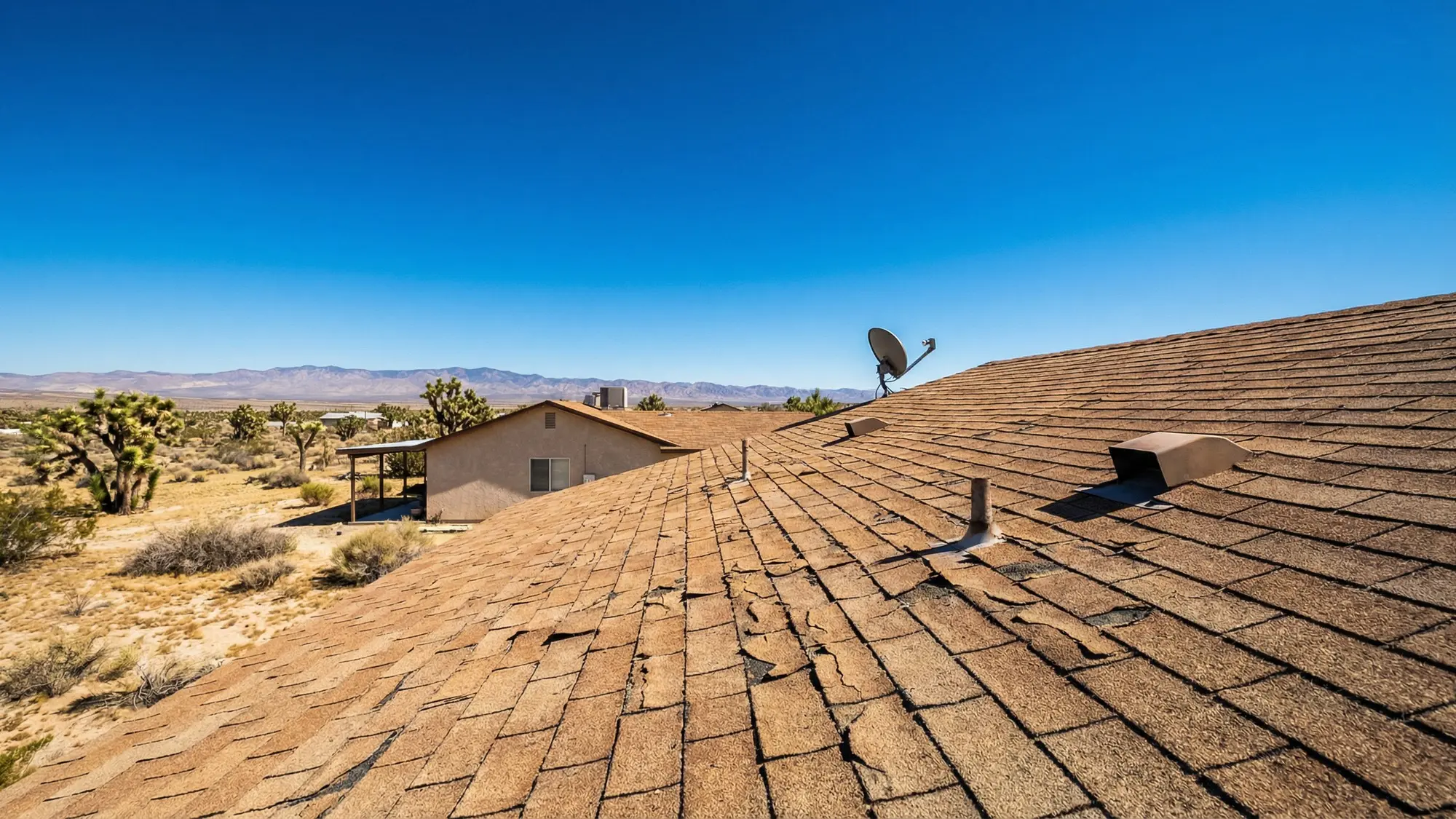
The result is cracking. Seams open up. Fasteners loosen as the holes around them widen. Sealant strips on shingles dry out and release. What was once a tight, integrated roofing system gradually develops gaps and weak points that allow moisture entry during rain events.
Heat-Induced Granule Loss
The granules embedded in the surface of asphalt shingles serve two critical functions: they protect the underlying asphalt from UV radiation, and they provide the shingle’s fire resistance rating. Extreme heat accelerates granule loss in two ways.
First, as the asphalt binder degrades from UV exposure, it loses its grip on the granules. Second, thermal expansion and contraction physically dislodge granules from the surface. You can track this process by checking your gutters — a steady accumulation of gritty, sand-like particles indicates your shingles are losing their protective layer.
Once granule loss reaches a critical point, the exposed asphalt deteriorates rapidly. The process feeds itself: less granule coverage means more UV hits the asphalt, which degrades faster, releasing more granules.
Dried-Out Sealants and Flashing
Every roof has dozens of points where different materials meet — around vents, chimneys, skylights, and at wall junctions. These transitions are sealed with caulk, mastic, or rubber gaskets that are all vulnerable to heat degradation.
In the High Desert, these sealants dry out and crack years earlier than they would in moderate climates. Rubber boots around plumbing vents become brittle and split. Flashing sealant shrinks and pulls away from surfaces. The result is a network of tiny openings that may not leak during a light rain but will absolutely fail during a heavy downpour or a wind-driven storm.
Attic Heat Buildup
The damage heat causes isn’t limited to the exterior surface. Poorly ventilated attics in the High Desert can reach temperatures exceeding 150 degrees. At those temperatures, the underside of your roof decking bakes for hours every day. Over time, this can cause plywood decking to delaminate, weaken structural connections, and even warp framing members.
Extreme attic heat also destroys insulation effectiveness, drives up cooling costs, and can cause condensation problems when temperatures drop rapidly in the evening. The attic is often where the most serious heat-related damage accumulates, and it’s the area homeowners are least likely to inspect.
Wind Damage from Desert Storms
Heat and wind go hand in hand in the High Desert. Hot, unstable air creates powerful windstorms that can arrive with little warning. These winds test every fastener, every adhesive bond, and every edge on your roof.
Shingles that have been weakened by heat and UV are especially vulnerable to wind uplift. Dried-out sealant strips that once held shingles flat can release, allowing wind to catch the edges and peel shingles back or tear them away entirely. Sand carried by these winds acts as an abrasive, scouring roof surfaces and wearing down protective coatings.
How Different Materials Handle Desert Heat
Not all roofing materials suffer equally in our climate:
Concrete and clay tile perform exceptionally well in the High Desert. Tile is inherently resistant to UV radiation, handles thermal cycling without significant deterioration, and provides excellent insulation value. It’s one of the reasons tile roofs are so common in our region.
Metal roofing reflects solar radiation rather than absorbing it, which dramatically reduces surface temperatures and thermal stress. Quality metal roofing systems with proper coatings can handle decades of desert conditions with minimal degradation.
Standard asphalt shingles face the greatest challenge. The petroleum-based composition that makes them affordable also makes them vulnerable to UV and heat. Premium architectural shingles with enhanced UV inhibitors perform significantly better than basic three-tab products, but asphalt will always require more maintenance attention in desert climates.
Cool roof systems are specifically engineered to reflect solar energy and emit absorbed heat. Cool roofs can reduce roof surface temperatures by 50 degrees or more compared to traditional dark-colored roofing, making them an excellent choice for the High Desert.
Protective Measures That Work
Cool Roof Coatings
For existing roofs, especially flat and low-slope systems, reflective coatings can dramatically reduce heat absorption. These elastomeric or acrylic coatings create a bright, reflective surface that bounces solar radiation away from the roof, lowering surface temperatures and reducing thermal stress on the materials beneath.
Adequate Ventilation
Proper attic ventilation is non-negotiable in the High Desert. A balanced system with intake vents at the soffits and exhaust vents at the ridge creates continuous airflow that carries heat out of the attic before it can damage the structure. In our climate, ventilation should exceed minimum code requirements — more airflow is always better.
Radiant Barriers
A radiant barrier installed in the attic reflects radiant heat back toward the roof rather than allowing it to radiate down into the attic space. Combined with proper ventilation and insulation, a radiant barrier can reduce attic temperatures by 20 to 30 degrees, extending the life of both the roof structure and the roofing materials.
Signs Your Roof Is Already Heat-Damaged
Watch for these warning signs that desert heat has taken a toll:
Curling shingles — edges turning upward or corners lifting
Visible cracking — splits in shingles, tiles, or flat roof membranes
Excessive granules in gutters — more than a light dusting after rain
Bleached or faded areas — significant color loss across the roof surface
Brittle materials — shingles that crack or break when touched
Interior signs — unexplained increases in cooling costs, hot spots on ceilings, or moisture stains after rain
If you notice any of these signs, schedule a professional roof repair evaluation before the damage spreads further.
Protecting Your Home Against the Heat
The High Desert’s heat is relentless, but it’s not unbeatable. With the right materials, proper ventilation, reflective strategies, and regular maintenance, your roof can stand up to decades of extreme conditions. The key is being proactive rather than reactive — by the time heat damage becomes obvious from the ground, it’s usually been developing for years.
At Chaparosa Roofing, we’ve built our reputation over 57 years by understanding exactly what desert conditions demand from a roof. Whether you need an assessment of your current roof’s condition, repairs to address heat damage, or guidance on upgrading to more heat-resistant materials, we’re here to help. Your roof takes the heat so your family doesn’t have to — make sure it’s ready for the job.