Roof Maintenance
7 Signs You Need a New Roof
November 15, 2024 · Chaparosa Roofing · 6 min read
How to Tell When It’s Time for a New Roof
Living in the High Desert means your roof faces conditions that most parts of the country never experience. Summer temperatures that regularly exceed 110 degrees, relentless UV radiation nearly year-round, and sudden monsoon downpours all take a serious toll on roofing materials. For homeowners in Apple Valley, Victorville, Hesperia, and the surrounding communities, understanding when your roof is nearing the end of its life can mean the difference between a planned upgrade and a costly emergency.
With over 57 years of experience serving the High Desert, Chaparosa Roofing has inspected thousands of roofs across the region. Here are the seven warning signs we see most often — and what each one means for your home.
The 7 Warning Signs
1. Your Roof Is Approaching or Past Its Expected Lifespan
Most asphalt shingle roofs are designed to last 20 to 30 years under normal conditions. But the High Desert is far from normal. The extreme heat cycling — scorching days followed by cool desert nights — causes roofing materials to expand and contract repeatedly, which accelerates aging. Many roofs in our area start showing serious wear by year 15 or 16, well ahead of the manufacturer’s rated lifespan.
If your roof is 15 years old or older, it is worth scheduling a professional roof inspection even if everything looks fine from the ground. Hidden damage on the underside of the decking or beneath the shingle layer is common and easy to miss without trained eyes.
2. Curling, Buckling, or Cracking Shingles
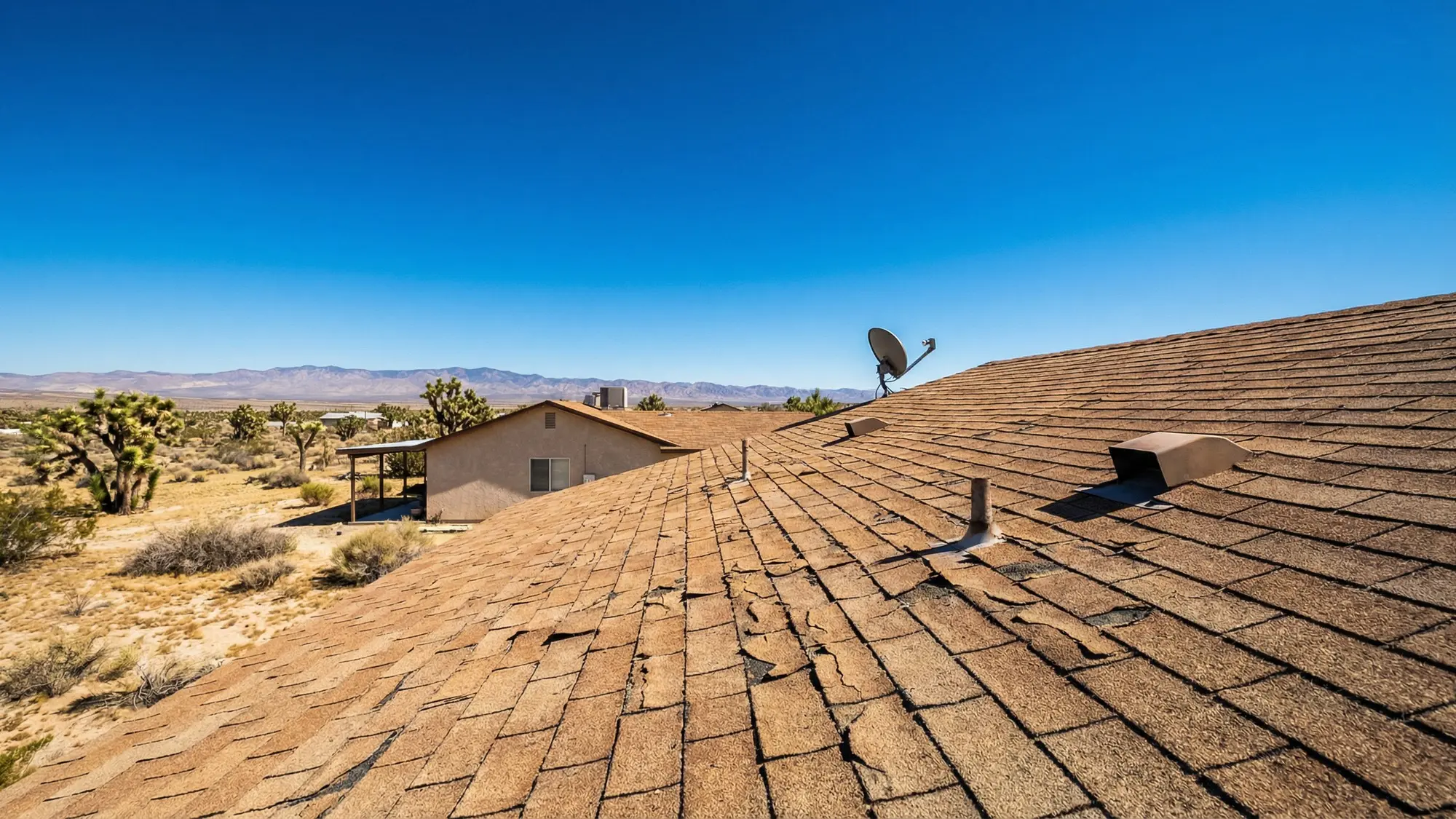
When shingles begin to curl upward at the edges, buckle in the center, or develop visible cracks, they have lost the flexibility needed to protect your home. In the High Desert, UV radiation is the primary culprit. The intense sun breaks down the petroleum-based compounds in asphalt shingles, making them brittle over time. Once shingles crack or curl, wind can get underneath them and tear them away entirely, leaving your roof deck exposed to rain during monsoon season.
If you notice isolated curling or cracking in one area, a targeted roof repair may be sufficient. But if the problem is widespread across multiple sections of your roof, replacement is typically the smarter long-term investment.
3. Missing or Deteriorating Granules
Those small, sand-like granules on the surface of your shingles are not decorative. They serve as your roof’s primary defense against UV radiation. When granules start falling off — you will find them collecting in your gutters or at the base of downspouts — your shingles lose their ability to reflect sunlight and resist heat damage.
In the High Desert, granule loss is accelerated by our extreme UV index. Once a shingle loses a significant portion of its granule coating, the underlying asphalt is exposed directly to the sun and deteriorates rapidly. This is one of the main reasons cool roof systems have become popular in our area — they are engineered to reflect more solar energy and resist UV degradation far longer than standard materials.
4. Daylight Visible Through the Roof Boards
Head into your attic on a bright afternoon and turn off the lights. If you see pinpoints of light coming through the roof boards, that is a serious problem. Anywhere light can enter, so can water, dust, and pests. Given how quickly a desert rainstorm can dump an inch or more of water in a short window, even a small opening can lead to significant interior damage.
This type of issue often calls for emergency roof repair. Do not wait for the next rainstorm to confirm the leak — by then, you could be dealing with damaged insulation, ruined drywall, or mold growth inside your walls.
5. A Sagging Roofline
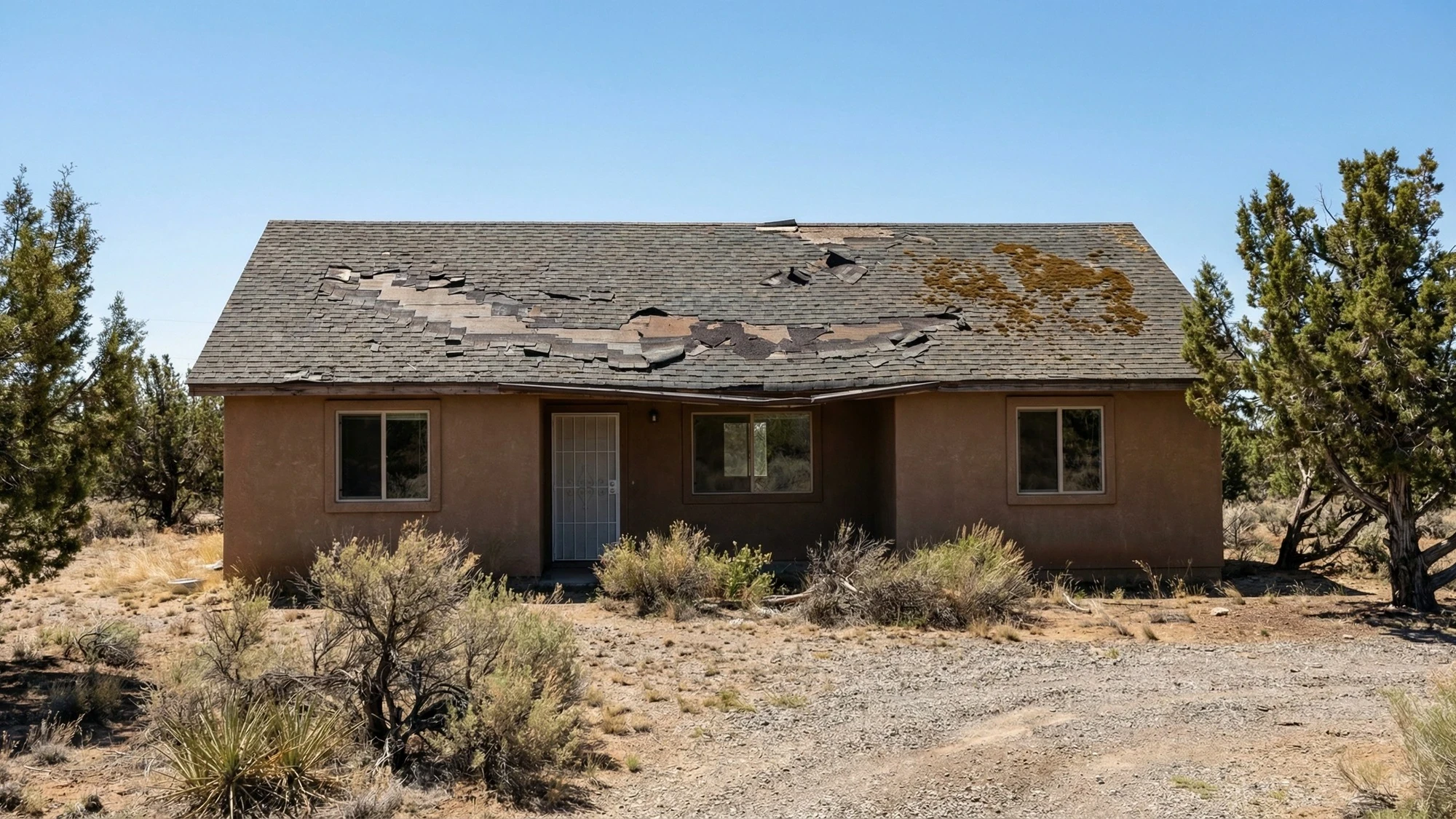
A visible sag in your roofline — whether a dip along the ridge or a soft, drooping section on one slope — indicates a structural problem beneath the surface. The roof decking may be deteriorating from moisture exposure, or the support framing underneath may be compromised. In the High Desert, the constant thermal stress on roofing materials can cause underlayment failure, which traps moisture against the decking and leads to rot even in our dry climate.
A sagging roof is never a cosmetic issue. It requires immediate professional evaluation. In many cases, the damage extends beyond the roofing material itself and into the structural components of your home, making a full roof replacement the safest and most cost-effective path forward.
6. Rising Energy Bills
Your roof plays a critical role in regulating your home’s temperature. When roofing materials deteriorate, they lose their ability to reflect heat and insulate properly. The result is that your HVAC system works harder and runs longer to maintain a comfortable indoor temperature, especially during the brutal summer months when cooling costs already run high.
If you have noticed a steady increase in your energy bills without a corresponding change in usage habits, your roof may be the hidden cause. Upgrading to a modern cool roof system or a high-performance shingle can reduce attic temperatures by 20 to 30 degrees and lower your cooling costs noticeably.
7. Frequent or Recurring Repairs
Calling a roofer once every few years for a minor fix is normal maintenance. But if you are scheduling roof repairs every year — or even multiple times per year — those costs add up quickly. At a certain point, continuing to patch an aging roof becomes more expensive than replacing it outright.
A good rule of thumb: if you have spent more than 30 percent of what a new roof would cost on repairs over the past three to five years, replacement is almost certainly the better financial decision.
Repair vs. Replace: How to Decide
Not every roofing problem requires a full replacement. Here are the key factors that help determine which approach makes sense for your home:
When Repair Is the Right Call
The damage is limited to a small, isolated section of the roof
Your roof is less than 10 to 12 years old
The underlying decking and structure are in solid condition
You have had no more than one or two repairs in recent years
When Replacement Makes More Sense
Damage is spread across multiple areas or the entire roof
Your roof is 15 years old or older
You are seeing several of the warning signs listed above at the same time
Repair costs are approaching a significant percentage of replacement cost
You want to upgrade to a more energy-efficient or durable material suited to desert conditions
As an Owens Corning Platinum Preferred contractor — a distinction held by less than one percent of roofing companies nationwide — Chaparosa Roofing can help you weigh these factors honestly. We have no interest in selling you a roof you do not need, and we will always recommend the most practical solution for your situation.
If cost is a concern, we offer flexible financing options that make a full replacement manageable without draining your savings.
Protect Your Home Before Problems Escalate
The High Desert is hard on roofs. The combination of extreme heat, intense UV exposure, and seasonal storms means that roofing problems rarely stay small for long. What starts as a few missing granules or a minor curl in a shingle can escalate into a leak, structural damage, or an emergency situation in a matter of months.
The best thing you can do as a homeowner is catch problems early. A free roof inspection from Chaparosa Roofing gives you a clear, honest picture of your roof’s condition and a straightforward explanation of your options. With 57 years of High Desert experience behind us, we know exactly what to look for and what the local climate does to every type of roofing material.
Ready to find out where your roof stands? Schedule your free inspection today or call us to speak directly with one of our roofing specialists. Whether you need a simple repair or a complete replacement, we will make sure you have the information you need to make the right decision for your home and your budget.