Roof Maintenance
Spring Roof Maintenance Checklist for High Desert Homes
January 28, 2026 · Chaparosa Roofing · 6 min read
Why Spring Is the Best Time for Roof Maintenance
After months of winter wind, cold nights, and the occasional desert rainstorm, spring gives High Desert homeowners a narrow window of mild weather to assess their roof’s condition. With summer temperatures regularly climbing past 110 degrees in Apple Valley and the surrounding communities, catching small problems now prevents them from becoming expensive emergencies once the heat bears down.
At Chaparosa Roofing, we’ve spent over 57 years maintaining roofs across the High Desert. The single most common mistake we see homeowners make is skipping seasonal maintenance. A roof that gets annual attention can last years longer than one that’s ignored until a leak appears in the living room ceiling.
Here’s the complete spring roof maintenance checklist we recommend for every High Desert home.
Your Spring Roof Maintenance Checklist
1. Visual Inspection from the Ground
You don’t need to climb a ladder to catch many common issues. Grab a pair of binoculars and walk the perimeter of your home, looking for:
Missing or damaged shingles. Winter winds can loosen or tear shingles, leaving your roof deck exposed. Look for gaps, lifted edges, or shingles that have shifted out of alignment.
Sagging areas. Any visible dip or sag in the roofline could indicate structural damage to the decking below. This requires immediate professional attention.
Debris accumulation. Branches, leaves, and desert debris can trap moisture and accelerate deterioration. Even small piles of organic material can cause problems if left in place.
Discoloration or dark streaks. Staining can indicate algae growth or areas where granules have worn away, reducing your roof’s UV protection.
If you spot anything concerning during your ground inspection, schedule a professional roof inspection rather than attempting to investigate on the roof yourself.
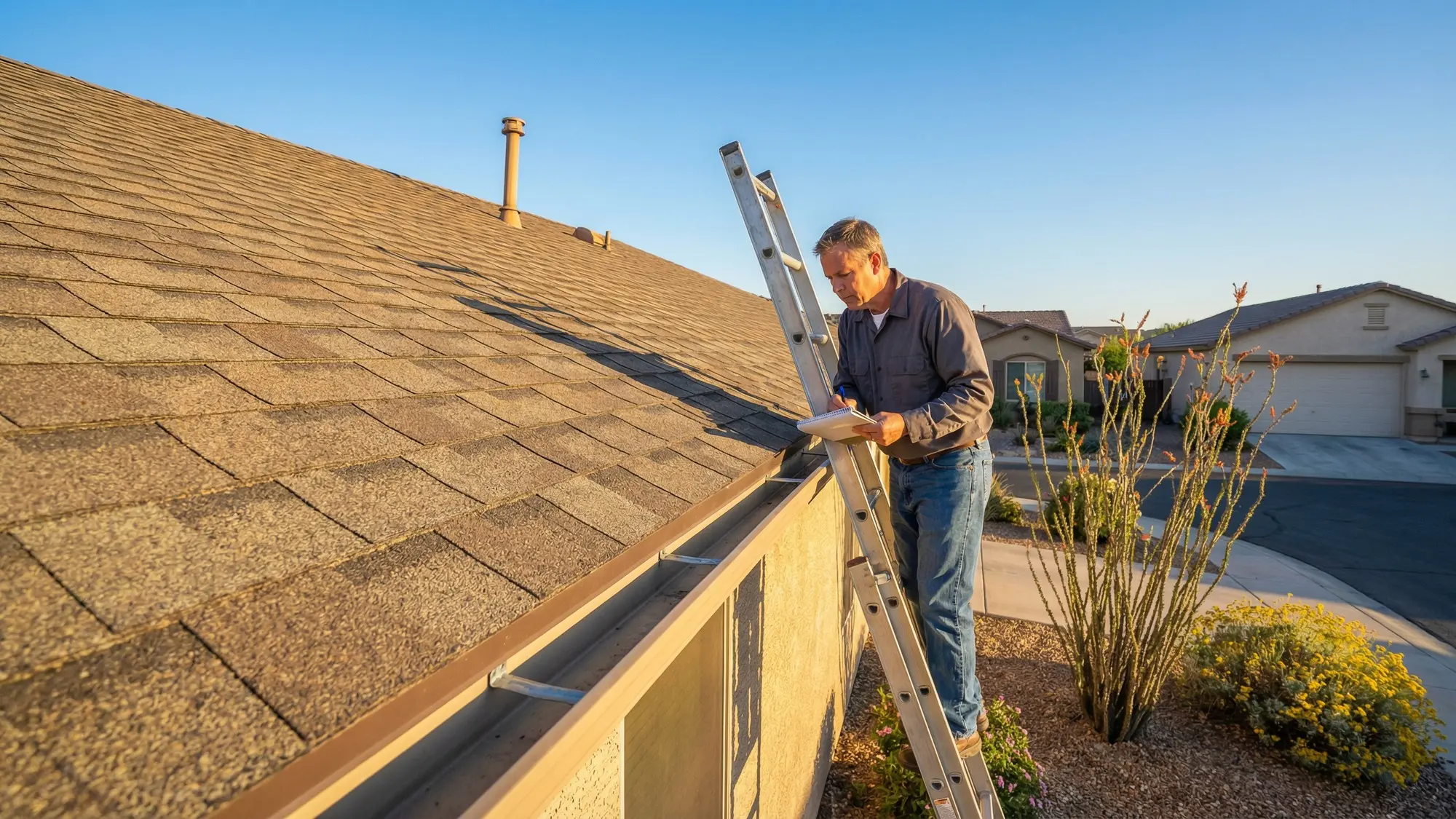
2. Clean Gutters and Check Downspouts
Gutters full of debris do more than look unsightly. When water can’t flow freely through your gutter system, it backs up under the roof edge, seeps beneath shingles, and can rot the fascia board and roof decking. In the High Desert, gutters also collect wind-blown sand and dust that compacts into a hard layer over time.
Clear all debris from gutters, flush downspouts with a hose to confirm they’re flowing freely, and check that downspouts direct water at least three feet away from your foundation. While you’re at it, look inside the gutters for an unusual amount of granules — dark, gritty particles that wash off aging asphalt shingles. Heavy granule loss is an early warning sign that your shingles are losing their protective coating.
3. Inspect the Attic
Your attic tells a story that the outside of your roof can’t. Head up with a flashlight and look for:
Daylight through the roof boards. If you can see light, water can get in.
Moisture or water stains. Dark spots on the underside of the decking or along rafters indicate past or active leaks.
Mold or mildew. Even a small patch of mold suggests a ventilation or moisture problem that will worsen in summer.
Ventilation. Confirm that soffit vents and ridge vents are unobstructed. Proper ventilation is absolutely critical in the High Desert, where poorly ventilated attics can reach 150 degrees or more in summer. That extreme heat radiates down into your living space and cooks your roofing materials from the underside.
Insulation condition. Check that insulation is evenly distributed and hasn’t been compressed, displaced by pests, or damaged by moisture. Adequate insulation reduces thermal stress on your roof structure.
4. Examine Flashing and Seals
Flashing is the metal material installed around roof penetrations — vents, chimneys, skylights, and where the roof meets walls. It’s one of the most common failure points on any roof, and the High Desert’s intense UV and temperature swings are especially hard on flashing sealants.
Look for:
Lifted or bent flashing edges
Cracked, dried-out, or missing sealant around penetrations
Rust or corrosion on metal flashing
Gaps between flashing and the roof surface
Deteriorated flashing is a leading cause of roof leaks. If you notice any issues, a roof maintenance visit can address these before they lead to interior water damage.
5. Trim Overhanging Branches
Trees near your home provide welcome shade in summer, but branches that hang over or touch your roof are a liability. They scratch and wear the roof surface in the wind, drop leaves and debris that trap moisture, and provide a highway for rodents to access your attic. Spring is the ideal time to trim branches back at least six feet from the roof edge.
In the High Desert, we also see damage from dead branches that snap during spring windstorms. Removing dead wood before storm season is a smart preventive measure.
6. Check for Sun Damage from Last Summer
The previous summer’s heat may have left damage that wasn’t visible during winter. Look specifically for:
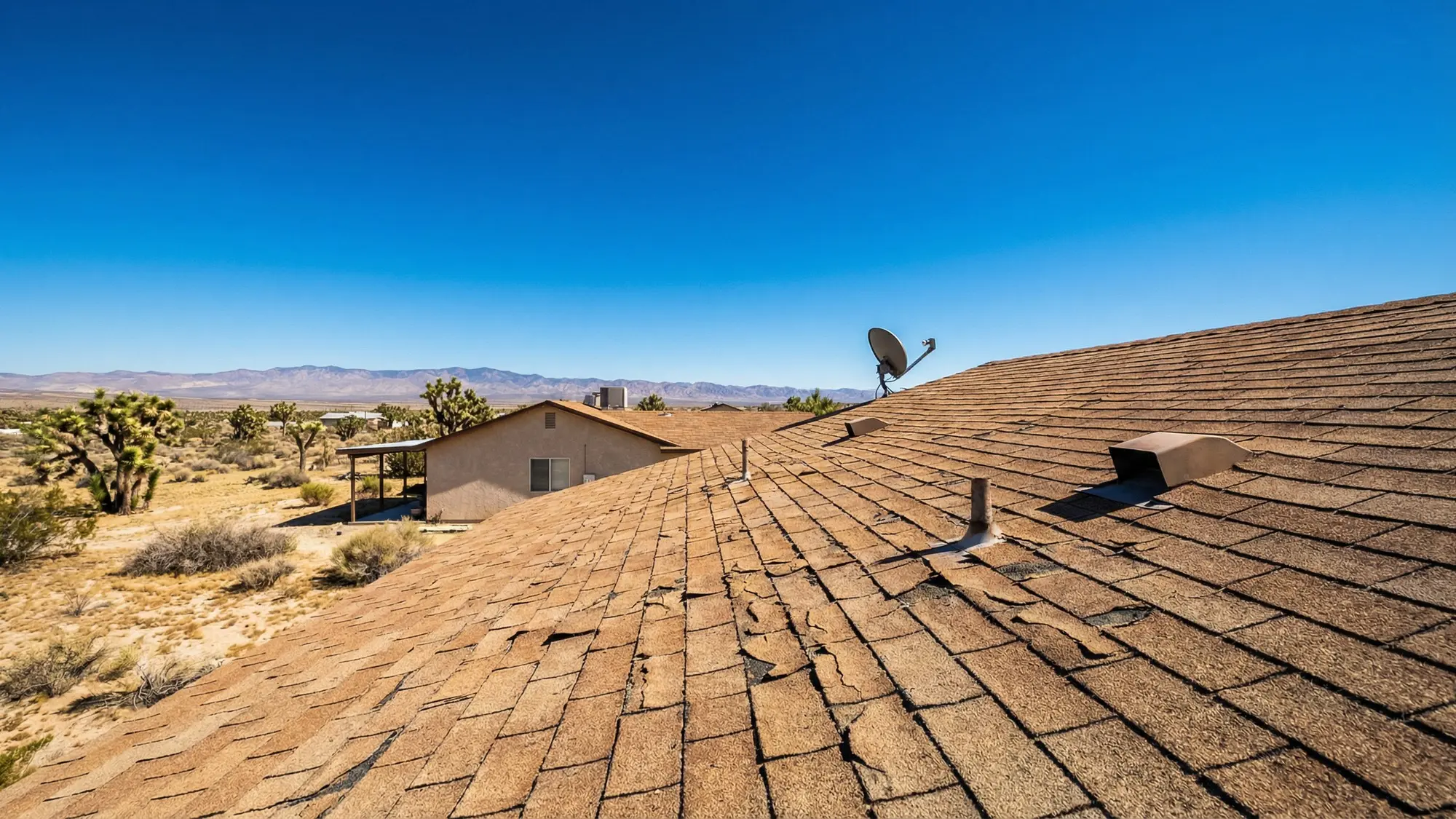
Curling shingles. When UV radiation breaks down the asphalt binders in shingles, the edges curl upward, creating entry points for wind and water.
Cracking. Thermal cycling — where roof surfaces heat to over 160 degrees during the day and cool by 50 degrees or more at night — causes materials to expand and contract repeatedly. Over time, this creates visible cracks.
Faded or bleached areas. Severe color loss indicates that UV radiation has broken down the surface layer of your roofing material.
Dried and brittle sealant strips. The adhesive strips on shingles can dry out in desert heat, allowing wind to lift individual shingles.
Desert-Specific Concerns to Watch For
The High Desert presents challenges that homeowners in milder climates never face. During your spring inspection, pay extra attention to these regional factors:
Wind damage from spring storms. March and April often bring powerful wind events to the Victor Valley. Check for shingles that have been lifted, creased, or torn away entirely. Even shingles that appear to be in place may have had their seal strips broken by wind and will be vulnerable going forward.
Sand and dust accumulation. Fine desert sand works its way into every gap and seam. Over time, it can clog weep holes in stucco walls, pack gutters solid, and abrade roof surfaces during windstorms.
UV degradation at elevation. The High Desert sits at roughly 3,000 feet of elevation, which means more intense UV exposure than coastal or valley locations. Materials deteriorate faster here than their manufacturers’ general lifespan estimates suggest.
When to Call a Professional
Some maintenance tasks — clearing gutters, trimming branches, and visual inspections from the ground — are well within the abilities of most homeowners. But there are clear situations where a professional should handle the work:
Any time you’d need to walk on the roof
Damaged or missing flashing
Signs of structural issues like sagging
Active leaks or significant water stains in the attic
Damage after a major storm event
If your roof is more than 15 years old and hasn’t been professionally inspected recently
A professional roof inspection catches problems that untrained eyes miss. At Chaparosa Roofing, our inspectors know exactly what High Desert conditions do to every type of roofing material because we’ve been working in this climate since 1969.
Make Spring Maintenance a Habit
The homeowners who get the longest life and fewest surprises from their roofs are the ones who make seasonal maintenance a non-negotiable habit. A spring checklist takes an hour or two of your time and can prevent thousands of dollars in avoidable repairs. Pair it with a professional roof maintenance visit once a year, and you’re giving your roof every advantage against the High Desert’s demanding climate.
If your spring inspection turns up anything concerning, or if you’d simply prefer to have a professional handle the entire process, give us a call. With 57 years of local experience, we know High Desert roofs better than anyone.