

Lifespan
15-50 years
Cost
$$-$$$
Durability
Energy Efficiency
Fire Rating
Class A
Maintenance
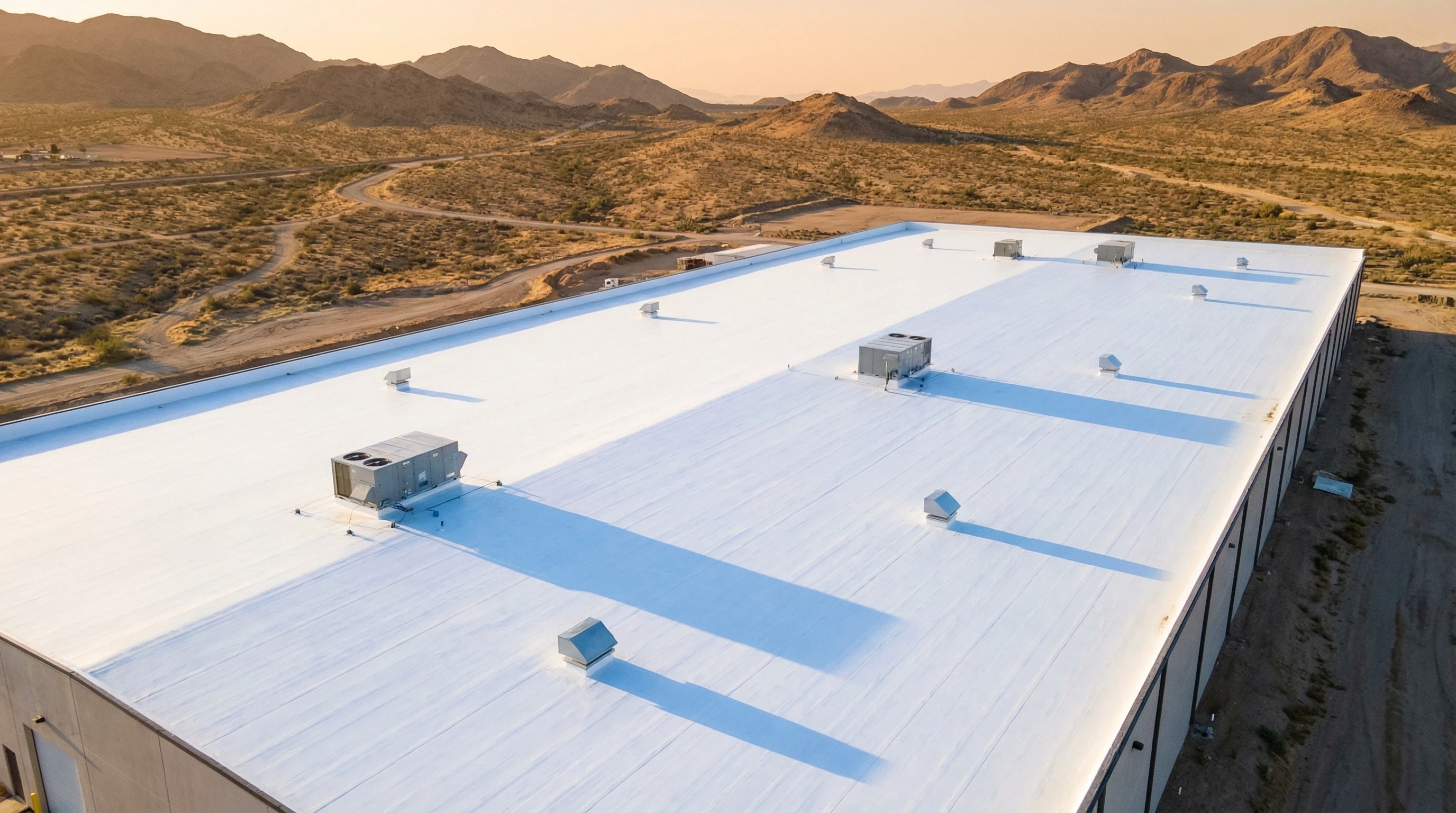
Cool roofs work on a simple but powerful principle: reflect solar energy instead of absorbing it. A standard dark roof absorbs 85-95% of the sun’s energy, converting it to heat that radiates into your building and drives up cooling costs. Cool roof surfaces flip that equation, reflecting 60-90% of solar radiation back into the atmosphere. The two key measurements are solar reflectance (how much sunlight the surface bounces back) and thermal emittance (how efficiently the surface releases any heat it does absorb). Together, these properties can reduce roof surface temperatures by up to 60 degrees Fahrenheit compared to conventional materials.
If there is any region where cool roof technology delivers maximum return on investment, it is the High Desert. Apple Valley and the surrounding communities regularly see summer temperatures above 110 degrees, and air conditioning accounts for a massive share of energy bills from May through October. A cool roof directly attacks the largest source of heat gain in most buildings — the roof itself. Beyond personal savings, cool roofs reduce strain on the electrical grid during peak demand, lower the urban heat island effect that makes developed areas even hotter, and extend the life of your HVAC equipment by reducing the load it carries. California’s Title 24 energy code increasingly mandates cool roof performance standards, making this technology not just smart but often required.
Cool roof technology is not a single product — it is a performance standard that can be achieved through multiple materials. Reflective coatings can be applied to existing flat or low-slope roofs for an affordable upgrade. Cool-color shingles use specialized pigments that reflect infrared heat while maintaining traditional dark or earth-tone appearances. Standing seam metal panels offer inherently high reflectance with decades of durability. TPO and PVC single-ply membranes provide excellent cool roof performance for commercial and flat-roof applications. We help you choose the right material based on your roof type, aesthetic preferences, budget, and energy savings goals.

Installation Process


At a Glance

Advantages
Reduce cooling costs by 15-30%
Meet or exceed California Title 24 requirements
Available in multiple material types (coatings, shingles, metal, membrane)
Reduce urban heat island effect
Extend HVAC system lifespan by reducing load


Considerations
May cost 10-20% more than standard versions
Light colors may not suit every aesthetic preference
Performance benefits are primarily in hot climates (less relevant in cold regions)


Key Features
High Solar Reflectance
Cool roof surfaces reflect 60-90% of solar energy vs. 5-15% for standard dark roofs, dramatically reducing heat absorption.
Title 24 Compliance
All our cool roof systems meet or exceed California’s Title 24 building energy efficiency standards.
Multiple Material Options
Cool roof technology applies to coatings, reflective shingles, metal panels, TPO/PVC membranes, and tile.
Energy Star Certified
Our cool roof products carry Energy Star certification for verified energy performance.
Project Gallery


High-reflectance cool roof system reducing surface temperature by up to 60°F


Energy Star-rated cool roof shingles in a desert-friendly color palette


Reflective tile roofing meeting California Title 24 energy standards
Years in Business
Owens Corning Nationwide
Google Rating
Licensed & Insured
FAQs
Related Materials
Both
Metal Roofing
The modern choice for maximum durability and energy efficiency. Metal roofs reflect solar heat, resist fire and wind, and can last 50+ years with virtually zero maintenance.
Learn more

Commercial
TPO Roofing
The industry standard for commercial flat roofs. TPO membrane reflects solar heat, resists chemicals and punctures, and provides a watertight seal across your entire building.
Learn more

Commercial
Flat Roof Coatings
Extend the life of your existing flat roof by 10-20 years without a full replacement. Roof coatings create a seamless, reflective barrier that waterproofs, insulates, and protects your investment.
Learn more

Get Started
Fill out the form and we’ll get back to you within 24 hours with a free estimate. Or call us directly — we pick up the phone.

(760) 240-0088
Free, no-obligation estimates
Response within 24 hours
Licensed, bonded & insured


