Roofing Tips
How to Select the Right Roofing Contractor
May 12, 2025 · Chaparosa Roofing · 4 min read
A roof is one of the largest single-trade investments a homeowner makes. The contractor you choose determines not just the quality of the work, but whether you have any recourse if something goes wrong. Here’s a systematic approach to evaluating roofing contractors before you commit.
Step 1: Verify the CSLB License
California requires any contractor performing work valued over $500 to hold a valid CSLB (Contractors State License Board) license. For roofing work, look for a Class C-39 (Roofing) license.
Verify at contractors.cslb.ca.gov — not just by looking at a contractor’s website or business card. Check that:
The license is active (not expired, suspended, or revoked)
The name on the license matches the company you’re talking to
The license classification includes C-39
An unlicensed contractor doing roofing work in California is operating illegally. If they damage your property, injure a worker, or do poor work, you have significantly fewer legal remedies than with a licensed contractor.
Step 2: Confirm Insurance Coverage
Ask for a Certificate of Insurance naming you as an additional insured. Verify:
General Liability Insurance: Covers damage to your property if the contractor causes it. The minimum for a roofing contractor should be $1 million per occurrence; larger projects warrant more.
Workers’ Compensation Insurance: Covers medical costs and lost wages for workers injured on your property. Without workers’ comp, an injured worker can potentially file a claim against your homeowner’s insurance. California requires workers’ comp for any contractor with employees.
Call the insurance company listed on the certificate to confirm the policy is active — certificates can be outdated or fabricated.
Step 3: Get at Least Three Written Estimates
Estimates serve two purposes: they help you understand the price range, and the quality of the estimate tells you something important about the contractor.
A quality estimate should specify:
Exact materials: brand name, product line, color, and model number — not just “30-year shingles”
Underlayment type: synthetic, felt, or self-adhering membrane — and where each is used
Flashing scope: what flashing is being replaced vs. reused
Permit fees: whether permit is included, and who is responsible for pulling it
Warranty terms: both manufacturer warranty tier and the contractor’s workmanship warranty
Payment schedule: deposit amount, progress payments (if any), and final payment timing
Vague estimates from contractors who “just need to see the job” before committing to specifics are a flag. A reputable contractor measures your roof, specifies the materials, and provides a detailed written scope.
Step 4: Check Local References — Not Just Reviews
Online reviews provide useful information, but they can be gamed. More valuable are:
Direct references: Ask for 2–3 homeowners in the High Desert area who had similar work done in the past 2 years. Call them. Ask about the crew’s professionalism, cleanup, whether the final cost matched the estimate, and whether they’d hire again.
Verify local tenure: A contractor who has been doing business in Apple Valley, Victorville, or Hesperia for 10+ years has a trackable local reputation. Someone who recently incorporated or relocated has less verifiable history.
Step 5: Understand the Warranty Structure
Roofing warranties have two components — and understanding both protects you:
Manufacturer warranty: Covers material defects. The tier of coverage available depends on which contractor installs the roof. Owens Corning’s highest warranty tier (Platinum Protection) is only available when installed by a Platinum Preferred Contractor. Ask specifically what warranty tier you qualify for.
Contractor workmanship warranty: Covers installation errors — the human failures that cause most roof problems. This is entirely separate from the manufacturer warranty. A contractor’s workmanship warranty is only as good as the contractor’s continued existence and willingness to honor it.
Ask: “If I have a leak in year 3, who do I call — you or the manufacturer?” The answer reveals how the warranty structure actually works in practice.
Step 6: Understand the Payment Structure
Never pay more than 10% (or $1,000, whichever is less) as a deposit — this is California law under the Contractors State License Law. Contractors who demand 50% or more upfront before starting work are a serious red flag.
Reasonable payment structures:
Small deposits (10% or flat amount) at signing
Progress payments tied to specific project milestones
Final payment upon completion and your satisfaction — not before
Avoid cash-only arrangements, contractors who won’t provide a receipt, and any pressure to pay immediately after the job is done before you’ve had a chance to inspect the work.
Step 7: Confirm Who Is Actually Doing the Work
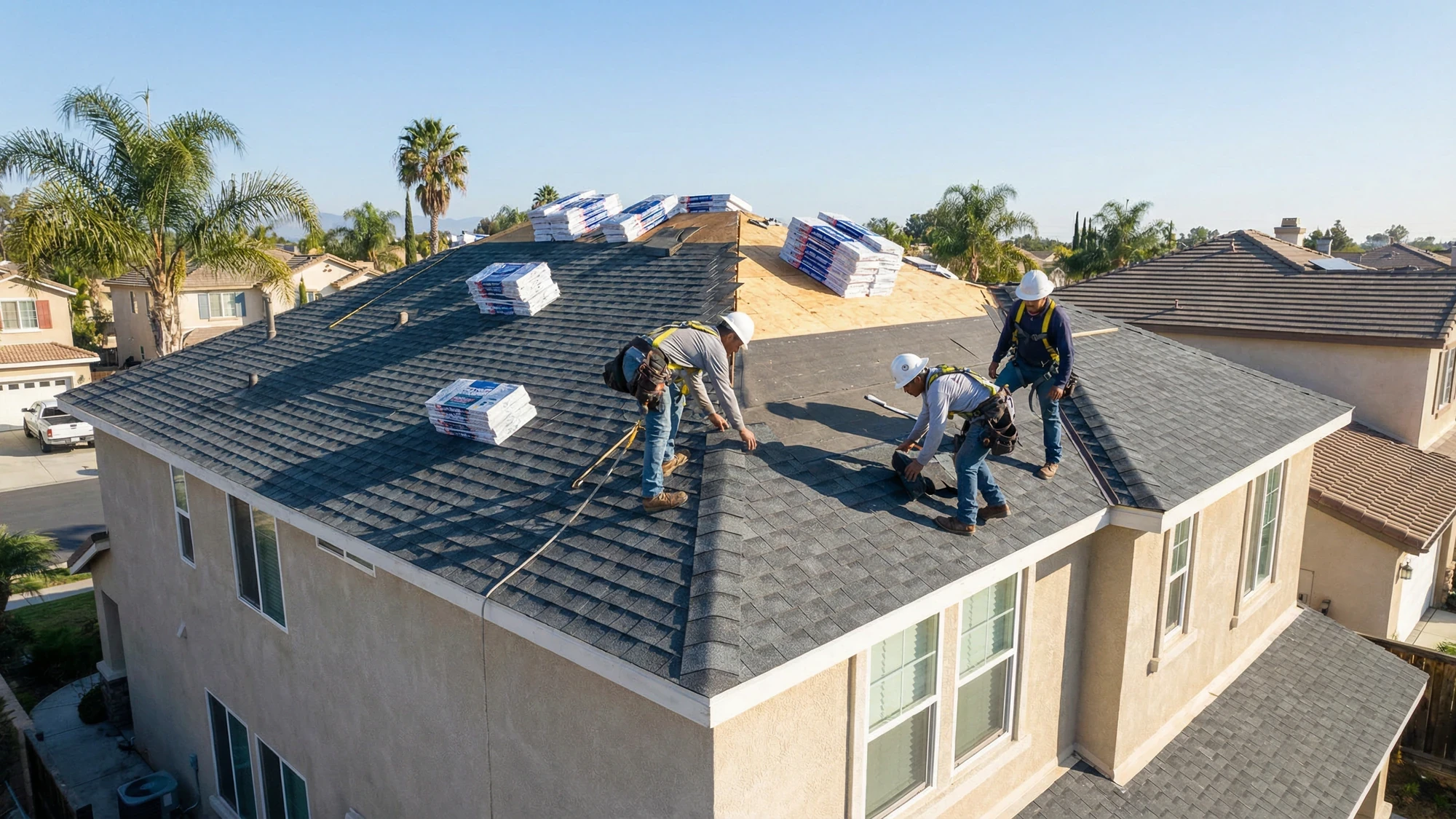
Some roofing companies sell the job and then subcontract the installation to a crew they have little control over. Ask directly: “Are your installers your own employees, or do you use subcontractors?” If subcontractors, confirm they are also properly licensed and insured.
The company whose name is on the estimate should be the company whose crew is on your roof.
Chaparosa Roofing holds a valid California C-39 license, carries full general liability and workers’ comp insurance, and has operated in the High Desert continuously since 1969. We use our own trained installation crews — not subcontractors — and back every job with a written workmanship warranty. Request your free estimate today.