Roof Maintenance
Pros and Cons of Roof Cleaning Explained
June 23, 2025 · Chaparosa Roofing · 4 min read
Roof cleaning is one of the most requested maintenance services — and one of the most misunderstood. Done correctly with the right method for your roof type, cleaning removes damaging organisms and restores appearance. Done incorrectly, it strips granules from shingles, cracks tile, and voids manufacturer warranties.
Here’s a balanced breakdown of the pros, cons, and what to watch for.
Why Homeowners Clean Their Roofs
Appearance
Dark staining on a roof is the most common motivator. In Southern California, the most frequent culprit is Gloeocapsa magma, a cyanobacterium that creates dark streaks running down the roof slope. Algae, lichen, and moss are also common on north-facing sections and in areas with overhanging trees.
A clean roof significantly improves curb appeal — and in some cases, the staining is actively affecting your property value or HOA standing.
Material Preservation
Lichen and moss are more than cosmetic problems. Lichen roots embed themselves into tile and shingle surfaces, causing micro-fractures as the organism expands and contracts. Moss holds moisture against roofing materials, accelerating decay of organic-mat shingles and compromising tile underlayment in severe infestations.
Removing these organisms before they cause structural damage is legitimate preventive maintenance.
Warranty Requirements
Some manufacturer warranties include provisions about maintaining the roof in clean condition. Algae-resistant shingles — like Owens Corning’s Duration with StreakGuard algae resistance — are designed to prevent regrowth, but may still benefit from initial cleaning if staining was already present at installation.
Cleaning Methods — and Why It Matters
This is where most homeowners get into trouble. There are three primary cleaning methods:
1. Soft Washing
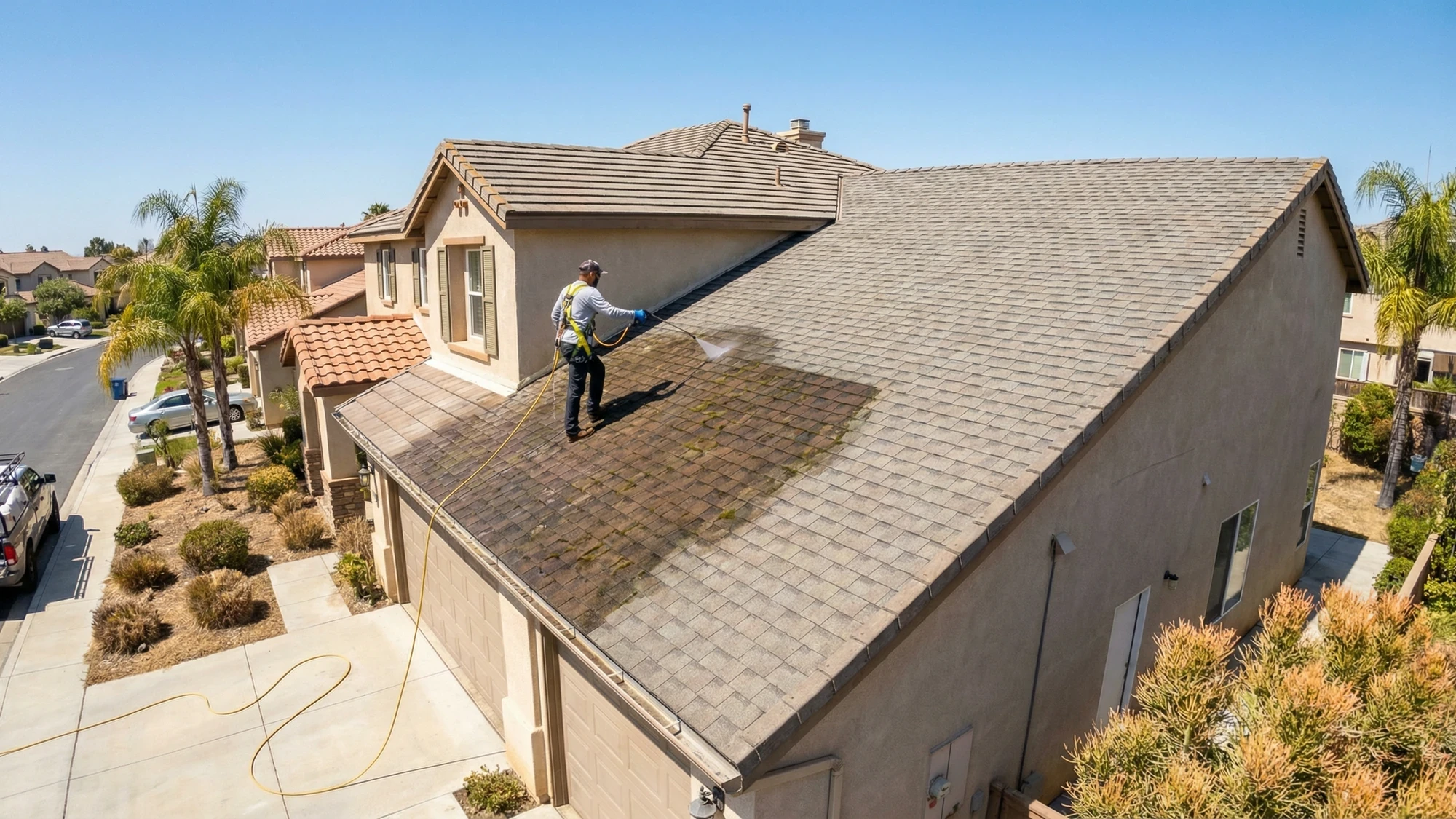
Soft washing applies low-pressure water combined with cleaning solutions (typically sodium hypochlorite-based) that kill algae, lichen, and moss at the biological level. The solution does the work; the water volume is low enough to not dislodge granules or crack tile.
This is the recommended method for most residential roofs.
2. Pressure Washing
High-pressure water blasting removes surface staining effectively — and also removes granules from asphalt shingles, can fracture clay tile, and forces water under tiles or shingles into the underlayment system.
Pressure washing should not be used on asphalt shingles. On concrete or clay tile, it requires careful technique and significantly lower pressure than most equipment operates at by default. If a contractor’s default approach is “pressure washing your roof,” ask specifically about their pressure settings and ask to see documentation that their method is manufacturer-approved.
3. Chemical Treatment Only
Some services apply algaecide or biocide treatments without washing. These kill biological growth and allow rain to gradually wash away dead material over weeks to months. This is the gentlest approach and works well for maintenance treatments after initial cleaning.
Pros of Roof Cleaning
Removes staining and restores appearance
Eliminates lichen and moss before they cause structural damage
Can extend roof life when done correctly and regularly
Maintains curb appeal for resale or HOA compliance
Allows for better visual inspection of roof condition
Cons and Risks
Wrong method causes damage: Pressure washing on shingles causes granule loss and shortens roof life — the cure is worse than the disease
Cost without matching benefit: If your roof is near end-of-life, cleaning extends its appearance but not its structural performance
Temporary results: Without algae-resistant materials or follow-up treatment, biological growth returns within 2–5 years in most climates
Chemical runoff: Sodium hypochlorite solutions can harm landscaping if not properly diluted and rinsed. A professional service should protect surrounding vegetation.
Walking damage on tile: Any foot traffic creates risk of cracking tile. Experienced crews use walk boards and know how to distribute weight; inexperienced crews crack tiles with every step.
When Cleaning Isn’t Worth It
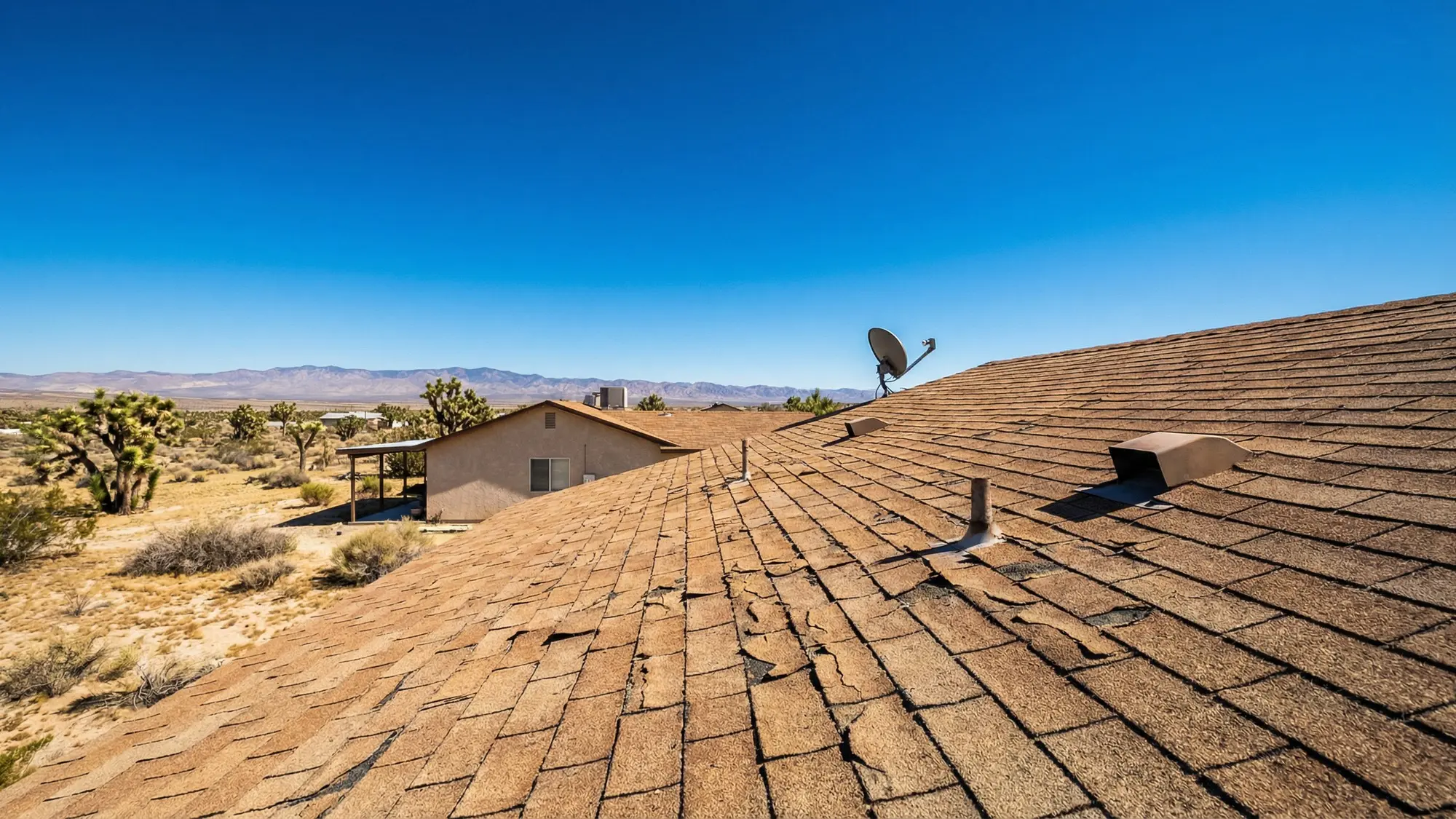
If your shingles are approaching end of life — significant granule loss, widespread curling, or age over 20 years — cleaning is cosmetic. It will make the roof look better for a few months but won’t change the fundamental condition or extend the time until replacement is needed. An honest assessment of your roof’s remaining life should precede any cleaning decision.
What to Ask a Roof Cleaning Contractor
What method do you use, and what pressure (PSI) do you work at?
What cleaning solution do you use, and how do you protect surrounding vegetation?
Is your method approved for my specific roof material?
Do you carry liability insurance and workers’ compensation?
What’s your warranty if the cleaning causes damage?
At Chaparosa Roofing, we’re happy to evaluate whether your roof is a good candidate for cleaning or whether a more substantive service is what’s actually needed. Schedule your free inspection today.