Roof Maintenance
Is Granule Loss on Your Roof Normal — or a Sign of Trouble?
August 18, 2025 · Chaparosa Roofing · 3 min read
If you’ve noticed what looks like coarse sand or gravel collecting in your gutters or downspout splash zones, you’ve found granules — the mineral coating embedded in the surface of asphalt shingles. Whether this is normal wear or a serious warning sign depends on context.
What Granules Actually Do
Granules serve three critical functions on an asphalt shingle roof:
UV protection: Granules block ultraviolet radiation from reaching the asphalt beneath. Without them, the oils in the asphalt evaporate faster, making shingles brittle and prone to cracking.
Fire resistance: The granule layer contributes to a shingle’s fire rating. Significant bare spots reduce that rating.
Aesthetics: Granules give shingles their color and texture. Uneven loss creates the blotchy, faded appearance that signals an aging roof.
When Granule Loss Is Normal
New Roof Installation
Newly installed shingles shed loose granules for the first few weeks or months. Manufacturers embed slightly more granules than adhere permanently, and the excess works its way off with early rain events and normal weathering. Finding moderate amounts of granules in gutters during the first year after installation is completely expected.
Light Seasonal Shedding
A small amount of granules in gutters after major storms or heavy rain is normal throughout a shingle roof’s life. Granule adhesion is never perfect, and minor losses happen continuously.
When Granule Loss Is a Warning Sign
Bald Spots or Bare Patches
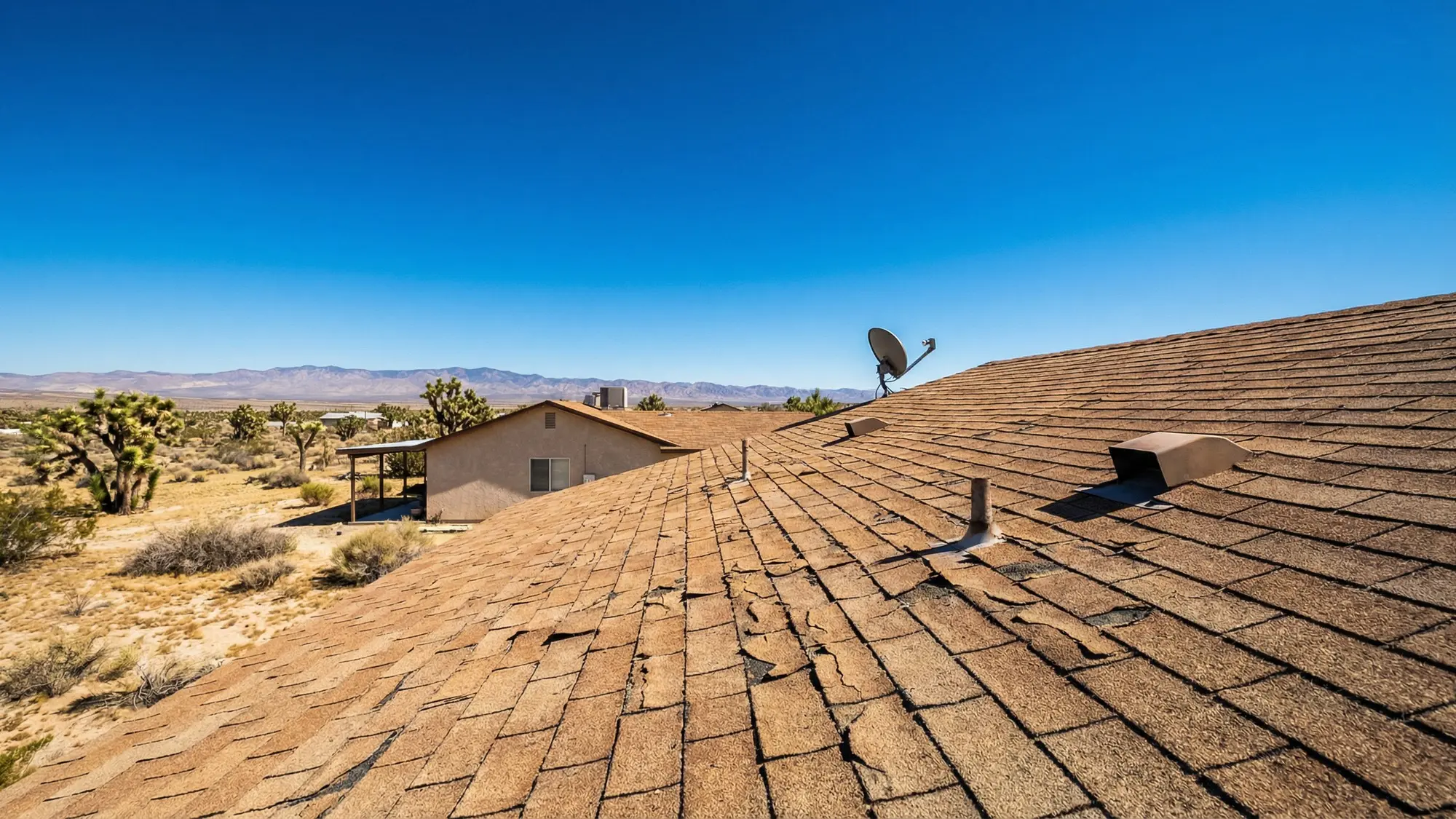
If you can see visible bare areas on individual shingles — spots where the dark asphalt mat shows through — the granule layer has failed in that location. Once exposed, asphalt degrades rapidly in direct sun. The High Desert’s UV intensity accelerates this process significantly compared to cooler, cloudier climates.
Large Volumes in Gutters
If your gutters look like they contain a layer of coarse sand after any given rain — not just trace amounts — you’re losing granules at an accelerated rate. This typically indicates a roof that has passed the midpoint of its useful life and is entering the degradation phase.
Uneven Color Across Roof Sections
Look at your roof from the ground on a clear day. A healthy shingle roof shows consistent color. If some sections appear lighter, faded, or blotchy compared to others, granule loss is uneven — which means some areas are aging faster than others. This can indicate improper ventilation creating hot spots, or manufacturing inconsistencies in a specific production run of shingles.
After Hail Impact
Hail doesn’t always leave obvious dents, but it does dislodge granules at the point of impact. After a hailstorm, inspect gutters for sudden large volumes of granules and look for circular areas on shingles where granule density appears reduced. This is typically an insurance-eligible event — document it before any further rain washes the evidence away.
The High Desert Factor
Southern California’s High Desert presents unusually challenging conditions for asphalt shingles. Temperatures regularly swing 40–50°F between day and night, causing repeated thermal expansion and contraction. Combined with intense UV radiation at elevation and occasional high-wind events, granule adhesion degrades faster here than national averages would suggest.
A shingle rated for 30 years in a temperate climate may show significant granule loss at 15–20 years in the High Desert without an impact-rated product or premium granule formulation.
What to Do If You’re Concerned
Step 1: Check your gutters — not just the visible sections, but downspout cleanouts where granules collect.
Step 2: If possible, view the roof from the ground with binoculars on a sunny day and look for discoloration or bare patches.
Step 3: Check your roof age. If it’s past 15 years and you’re seeing significant granule loss, a professional inspection is warranted.
Step 4: Schedule an inspection before the next rain season. Granule loss is the early indicator — if underlying asphalt is already exposed and degrading, your next heavy rain may be the event that drives water inside.
A professional roof inspection at Chaparosa Roofing includes a granule assessment, documentation of any bare or degraded areas, and an honest assessment of remaining roof life versus repair versus replacement. Schedule your free inspection today.