Roof Maintenance
How Severe Weather Impacts Your Roof — and How to Prepare
May 19, 2025 · Chaparosa Roofing · 4 min read
Southern California’s High Desert presents a surprisingly varied set of weather challenges for residential and commercial roofs. While the region doesn’t face the hurricane or blizzard risk of other parts of the country, it experiences weather conditions that cause specific types of roofing damage — some of which aren’t obvious until the next rain event reveals the consequences.
Wind Damage — the Most Common High Desert Roofing Threat
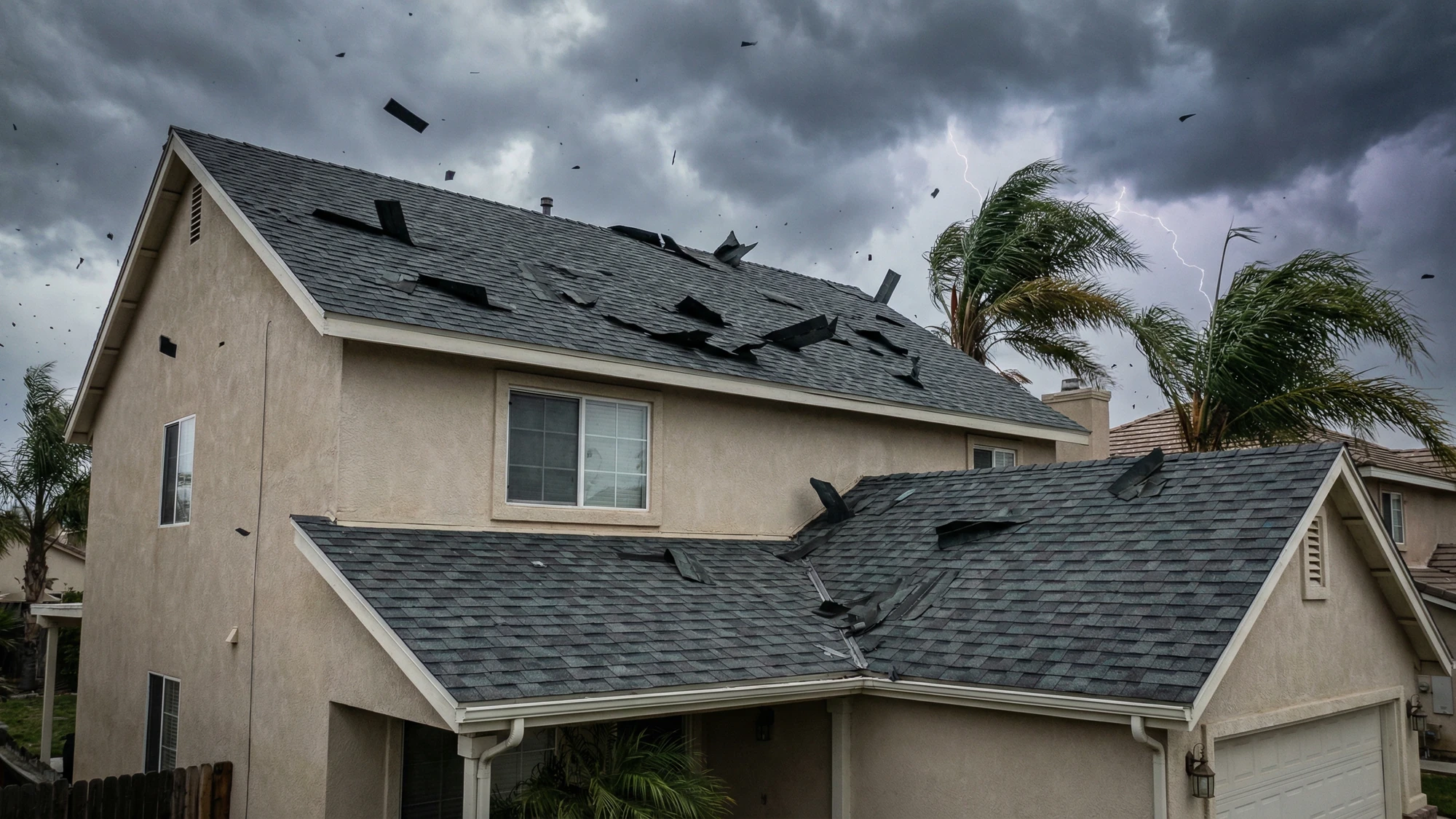
The Mojave Desert and High Desert are regularly exposed to strong wind events. Santa Ana conditions push warm offshore winds across the region at speeds that regularly exceed 50 mph and occasionally reach 80+ mph in exposed areas. Locally, the areas around Cajon Pass, Victorville, and the mountain passes see some of the most intense wind events in Southern California.
How Wind Damages Roofs
Shingle roofs: Wind gets under shingle edges and lifts them. At lower speeds, this causes partial sealing strip failure, leaving shingles vulnerable to water entry even if they appear intact from the ground. At higher speeds, shingles are peeled or blown off entirely, exposing the underlayment and decking below.
Tile roofs: Ridge cap tiles — the specially shaped tiles at the hip and ridge lines — are particularly vulnerable. They’re often set in mortar beds that degrade over time, leaving the tiles held only by their own weight. Wind events frequently shift or topple ridge caps while leaving field tiles intact.
Flat/commercial roofs: TPO and EPDM membranes can experience uplift at edges and seams if termination bars or seam welds fail. Edge metal (fascia and coping) is also vulnerable to wind lifting.
Preparation
Have mortar beds at ridge caps inspected every 5–7 years; remortar before the next major wind season
Ensure shingle sealing strips are activated — new shingles require some thermal cycling to fully adhere; manually seal edges in windy locations
On flat roofs, inspect edge metal and membrane terminations annually
Hail Damage — Harder to Detect Than You’d Think
The High Desert sees hail events, particularly in late fall, winter, and early spring when thunderstorm patterns affect the region. Hail damage to roofing is often invisible from the ground and is one of the primary reasons roofs need professional inspection after storms.
How Hail Damages Roofs
Asphalt shingles: Hail impacts dislodge granules at the point of impact, creating circular “bruise” patterns where the granule layer is thin or absent. These spots expose the asphalt mat to UV and moisture, accelerating aging in those locations. The damage isn’t always apparent immediately but degrades over time.
Tile roofs: Clay tile can crack under hail impact. The crack may not be through-and-through initially, but subsequent freeze-thaw cycles or thermal expansion can cause a hairline crack to propagate. Hail damage to tile is often found on one side of the roof — the side facing into the storm’s direction of travel.
Preparation and Response
After any hail event, inspect gutters for large volumes of granules (indicates significant shingle impact)
Document with photographs before any rain washes away granule accumulation
Contact your homeowner’s insurance — hail damage is typically a covered event, but claims have deadlines
Schedule a professional inspection; hail damage is best assessed from the roof surface, not the ground
Extreme Heat — the Long-Term Killer
The High Desert regularly experiences summer temperatures exceeding 110°F. Roof surface temperatures during these periods can reach 150–170°F or higher. This level of thermal stress is not a single-event concern — it’s a cumulative factor that significantly shortens the lifespan of some roofing materials.
How Extreme Heat Affects Roofing
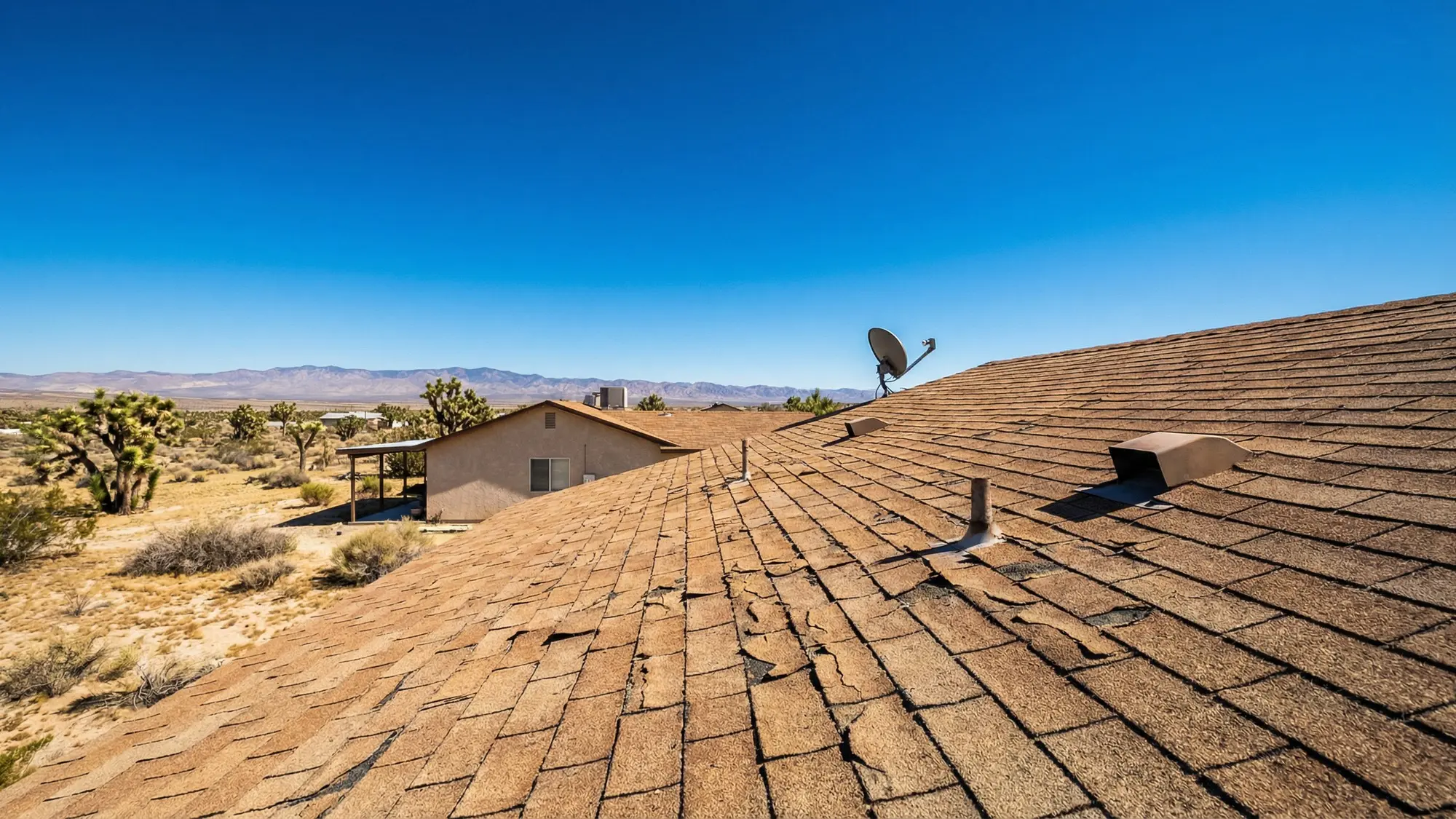
Asphalt shingles: Repeated thermal cycling causes the asphalt layer to expand and contract, eventually leading to granule loss, brittleness, and cracking. Shingles rated for 30 years in temperate climates may show significant degradation at 15–20 years in the High Desert.
Underlayment: Synthetic underlayment handles heat better than felt, but all underlayment ages faster under extreme heat conditions.
Sealant and caulk: High-temperature sealants are required in desert climates. Standard caulk softens and flows at elevated temperatures, losing adhesion at penetrations and flashings.
Preparation
Use premium impact-rated shingles with enhanced granule adhesion in the High Desert; they handle thermal stress better than standard products
Specify high-temperature sealants at all penetrations during installation and repair
Ensure attic ventilation is balanced — a hot, poorly ventilated attic concentrates heat on the roof deck, accelerating aging from below
Pre-Storm Preparation Checklist
Before the fall/winter rain and wind season:
Clear gutters and valleys of summer debris accumulation
Inspect and re-mortar tile ridge caps if they haven’t been checked recently
Examine pipe boots and vent cap sealants — these are the most common single-point failures in High Desert conditions
Look for any lifted shingle edges from summer wind events that may have loosened sealing strips
Schedule a professional inspection if the roof is over 15 years old or you haven’t had a professional look in 3–5 years
Chaparosa Roofing offers pre-season inspections and storm damage assessments across the High Desert. Schedule yours before the next weather event.