Roof Repair
Silicone Roof Coating: Benefits, Costs & Long-Term Protection
April 28, 2025 · Chaparosa Roofing · 4 min read
For flat and low-slope roofs — common on commercial buildings, industrial facilities, and some residential applications — silicone roof coatings are among the most effective life-extension tools available. Applied over an existing membrane, they add 10–15 years of service life at 30–50% of the cost of full replacement.
But they’re not the right solution for every roof or every condition. Understanding when silicone works — and when it doesn’t — is essential before committing to this approach.
What Is a Silicone Roof Coating?
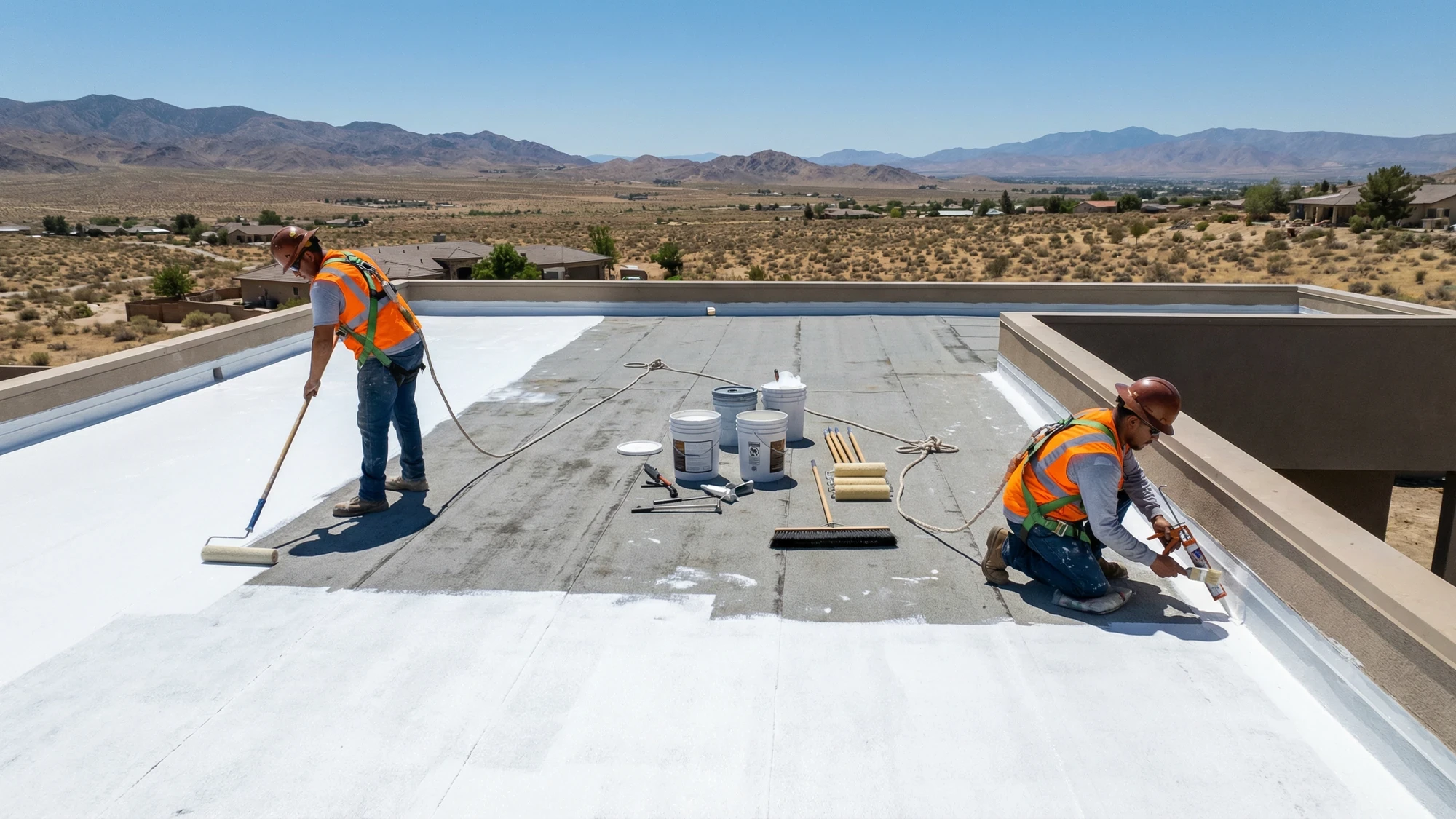
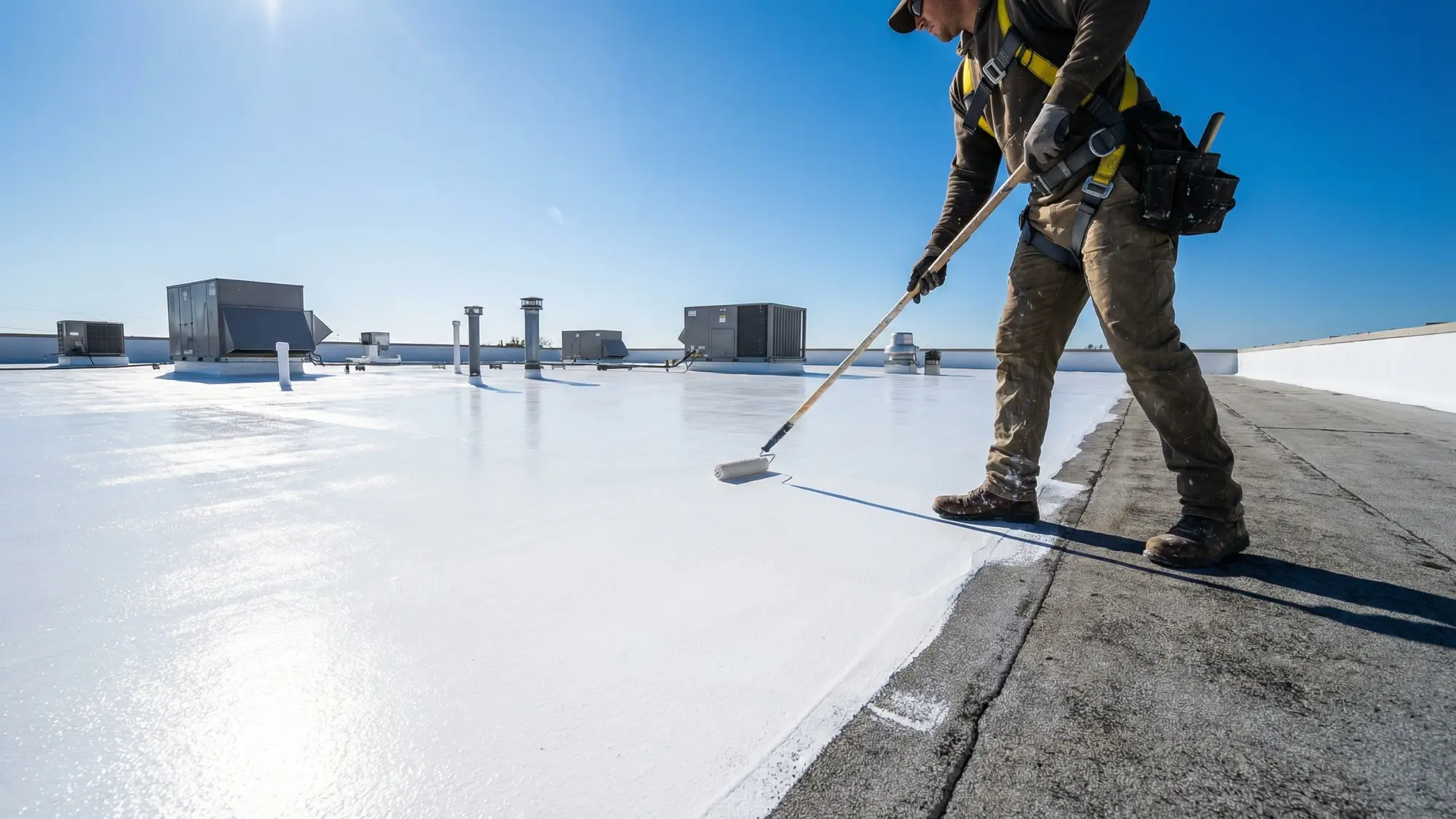
Silicone coatings are liquid-applied, 100% silicone formulations that cure to a seamless, flexible membrane over an existing roofing surface. Unlike acrylic or polyurethane coatings, silicone doesn’t absorb water, doesn’t re-emulsify when wet, and retains its flexibility through extreme temperature cycles.
The coating is applied in one or more coats (typically 20–30 mil total dry film thickness for warranty eligibility) using spray equipment, rollers, or brushes. When cured, it forms a waterproof barrier that bonds to the underlying substrate and bridges minor cracks and seam gaps.
Key Benefits of Silicone Roof Coatings
Waterproofing and Ponding Water Resistance
Unlike acrylic coatings that soften and degrade under standing water, silicone is inert to ponding water. This is a critical advantage for flat roofs that don’t drain completely — a common condition as drainage systems age and roof profiles settle.
UV and Temperature Resistance
Silicone’s molecular structure makes it highly resistant to UV degradation and ozone. In Southern California’s High Desert — with intense year-round UV exposure and surface temperatures exceeding 150°F in summer — silicone outperforms competing coating types significantly.
Reflectivity and Energy Savings
White silicone coatings have high solar reflectance (typically 0.80–0.85 initial reflectance) and thermal emittance. This reduces rooftop temperature and the heat load on interior spaces, lowering cooling costs in the High Desert’s hot summers.
For commercial buildings, a reflective coating may also qualify for Title 24 energy code compliance.
Seamless Application
Because silicone is applied as a liquid, it bridges minor seam gaps, small cracks, and irregular surfaces. The result is a monolithic membrane without mechanical fastener penetrations — eliminating the seam failure patterns common in mechanically attached single-ply systems.
Long Service Life When Properly Applied
Manufacturer warranties on silicone coatings range from 10 to 20 years, depending on application thickness and the manufacturer’s certification program. Re-coating at warranty expiration extends the system’s life indefinitely without tear-off.
Costs
Silicone roof coating costs for commercial applications in Southern California typically range:
Roof Size | Estimated Cost Range |
|---|---|
Under 5,000 sq ft | $4,000–$10,000 |
5,000–15,000 sq ft | $8,000–$25,000 |
15,000–40,000 sq ft | $18,000–$55,000 |
Over 40,000 sq ft | $1.25–$1.75/sq ft |
Factors that influence cost:
Existing roof condition: Significant repairs before coating adds cost
Number of coats: Heavier applications for warranty qualification
Access and equipment: Multi-story buildings require more equipment
Surface preparation: Pressure washing, priming, and seam reinforcement are typically required
Compare this to full TPO replacement at $7–$12/sq ft or modified bitumen re-roofing at $5–$10/sq ft — for qualifying roofs, silicone coating offers substantial savings.
When Silicone Coating Makes Sense
Silicone coating is appropriate when:
The existing roofing substrate is structurally sound and well-adhered
The roof is free of trapped moisture (wet insulation under the membrane will continue to degrade regardless of surface coating)
The membrane has no widespread seam failures or substrate separation
The building owner wants to defer replacement cost with a documented warranty
It is not appropriate when:
Moisture is trapped in the insulation beneath the membrane
The existing membrane has extensive delamination or substrate separation
The decking has structural deficiencies
The roof drainage cannot be improved to prevent significant ponding
The Required Pre-Coating Process
A silicone coating applied over the wrong substrate fails — often quickly. Before any coating is applied:
Moisture survey: Infrared or nuclear moisture detection identifies wet insulation beneath the membrane. Wet areas must be repaired before coating.
Pressure wash: The surface must be clean and dry for adhesion
Priming: Many substrates require primer coats before silicone application
Seam reinforcement: Open or lifting seams should be reinforced with fabric before the field coat
Penetration detailing: All pipe boots, curbs, and edge conditions must be addressed before field application
Skipping any of these steps produces a coating failure within years.
Chaparosa Roofing applies silicone roofing systems to commercial and industrial facilities throughout the High Desert. We perform moisture surveys before any coating recommendation and provide written documentation of existing conditions, applied materials, and warranty registration. Contact us for a coating assessment.