Roof Repair
Roof Restoration Companies — What They Do and How to Choose One
April 14, 2025 · Chaparosa Roofing · 4 min read
The roof restoration market has grown substantially as building owners look for alternatives to the high cost of full replacement. When executed correctly on the right roof, restoration genuinely extends service life and delivers solid return on investment. When executed poorly — or sold as a fix for a roof that actually needs replacement — it creates a costly illusion that delays necessary work while collecting a fee.
Understanding what distinguishes legitimate restoration work from oversold surface treatments helps you make an informed decision.
What Roof Restoration Actually Means
Legitimate roof restoration involves diagnosing the current condition of the roofing system, addressing underlying deficiencies, and applying materials or treatments that extend the functional life of the assembly.
For different roof types:
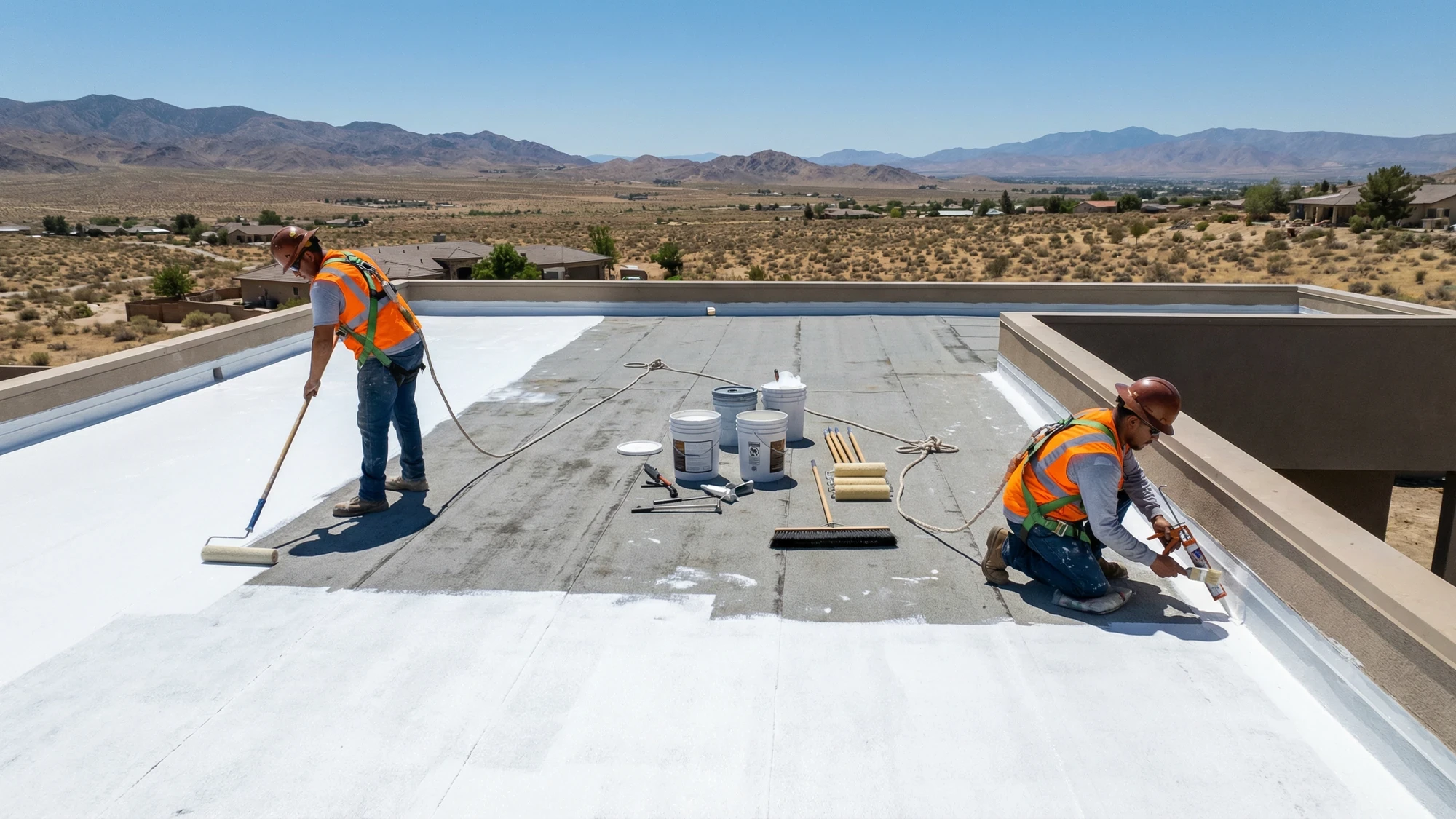
Flat/Low-Slope Commercial Roofs Full restoration typically involves a moisture survey, repair of failed seams and penetrations, and application of a manufacturer-backed coating system (silicone, acrylic, or polyurethane). The goal is adding 10–20 years to a roof that is aged but structurally sound.
Tile Roofs (Clay and Concrete) Tile restoration addresses the underlayment — the actual waterproofing layer — by lifting and resetting existing tiles over new underlayment when the existing membrane has aged past service life. This restores the waterproofing function without replacing the tiles themselves. Additional work includes remortar of ridge and hip caps, replacement of cracked or broken tiles, and sealing treatments.
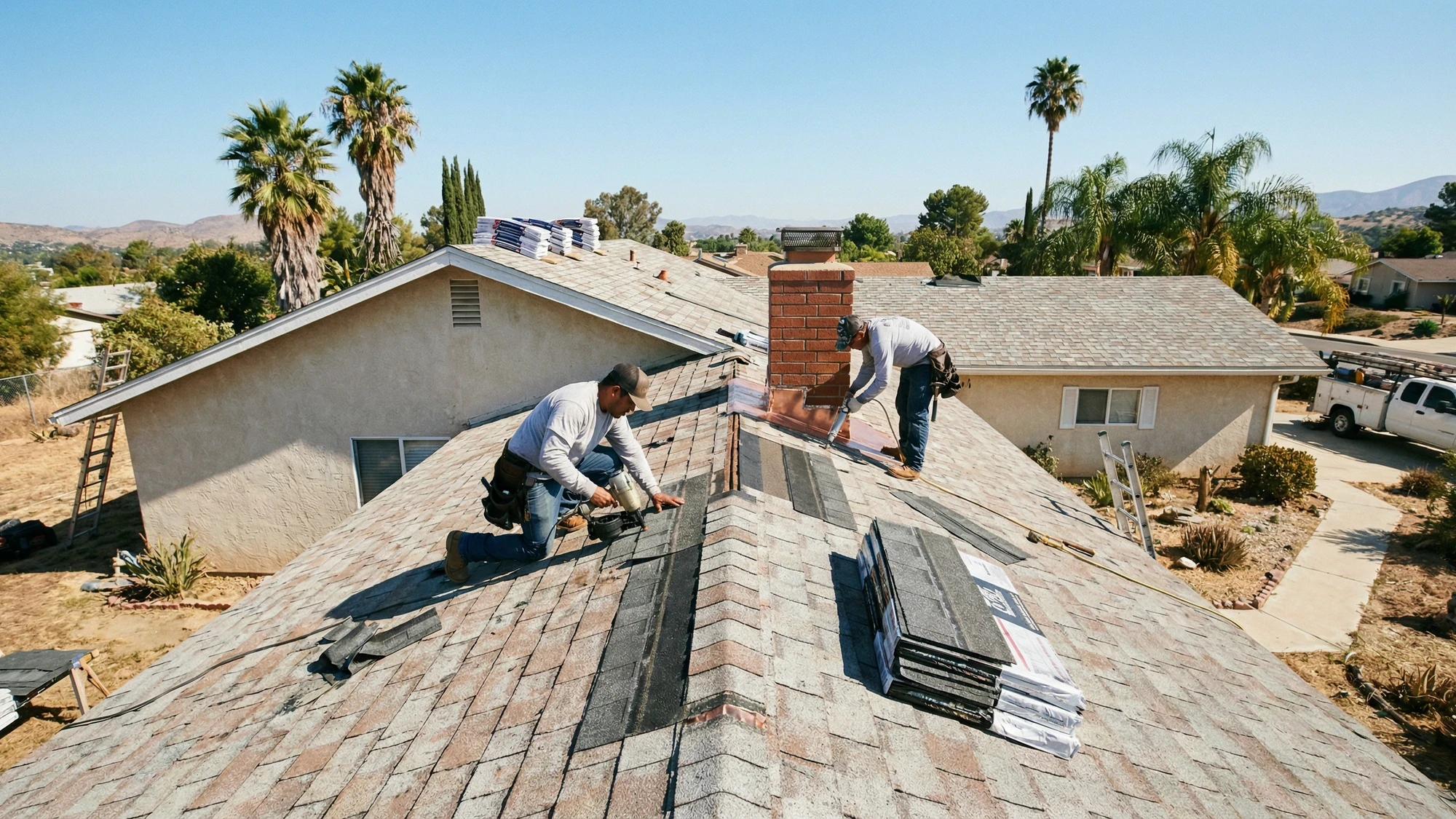
Shingle Roofs True restoration for shingle roofs typically means partial or full replacement of degraded sections with new material. “Restoration coatings” marketed for shingle roofs are generally not endorsed by shingle manufacturers and don’t meaningfully extend shingle life — the coating doesn’t address the underlying asphalt degradation.
How to Distinguish Quality Restoration Companies
They Perform Diagnostics First
A restoration company worth hiring diagnoses before proposing. For flat roofs, this means moisture scanning before any coating recommendation. For tile roofs, it means assessing underlayment condition — not just the visible tile surface.
A company that looks at your roof from the ground and immediately proposes a coating treatment has sold you a product, not a solution.
They Specify What They’re Applying
Quality contractors provide written specifications: exact product name, manufacturer, application rate, dry film thickness, and warranty coverage. Vague descriptions like “premium elastomeric coating” or “10-year waterproof sealant” without brand names or product specifications are warning signs.
Ask specifically: “What product are you applying, and can I verify its specifications with the manufacturer?”
They Hold Manufacturer Certifications
For coating systems and underlayment products, manufacturers typically certify contractors who have completed training in their installation requirements. Certification means the contractor’s work qualifies for the manufacturer’s warranty — not just the contractor’s word.
Ask if the contractor is certified by the manufacturer of the product they’re proposing, and verify directly with the manufacturer if the claim matters to you.
Their Warranty Is Written and Specific
What exactly does the warranty cover? For how long? Who honors it — the contractor, the manufacturer, or both? What specifically voids it?
A written warranty that specifies coverage, exclusions, and the process for making a claim is meaningful. “We stand behind our work” is not.
They Tell You When Restoration Isn’t the Right Answer
The clearest indicator of an honest company is one that will tell you when full replacement makes more sense than restoration — even though replacement generates more revenue.
If a roof has extensive wet insulation, significant substrate damage, or is simply too aged to support another 10+ years with surface treatment, a responsible contractor says so. If every company you talk to recommends restoration regardless of condition, get an independent assessment.
When Restoration Is the Right Choice
Restoration is cost-effective and appropriate when:
The roofing substrate (decking, insulation) is in sound condition
No significant moisture is trapped beneath the membrane
The membrane is aged and faded but not failing at widespread seams or penetrations
The building owner wants to defer replacement cost while maintaining waterproofing performance
The projected life extension (10–15 years) makes financial sense relative to the cost
Restoration is not appropriate when:
Wet insulation is present beneath the membrane
The membrane has widespread adhesion failure or delamination
The structure has underlying damage that surface treatment won’t address
The installation is too old for any coating to meaningfully extend the assembly’s life
Chaparosa Roofing’s Restoration Approach
At Chaparosa Roofing, we start every restoration evaluation with an honest assessment of the roof’s actual condition. We use infrared moisture scanning to identify wet areas before making any recommendation. When restoration makes sense, we specify the products in writing, apply them to manufacturer specifications, and register warranties directly with manufacturers.
When replacement is the right answer, we say so — and explain why. Contact us for a free restoration evaluation on your commercial or residential roof.