Roofing Tips
Flat Roof vs. Pitched Roof: A Homeowner's Guide
July 28, 2025 · Chaparosa Roofing · 3 min read
If you’re planning a new construction or a full roof replacement, one of the first decisions you’ll face is whether to go with a flat roof or a pitched (sloped) roof. Both have legitimate advantages — the right choice depends on your building type, climate, budget, and long-term maintenance preferences.
Defining the Difference
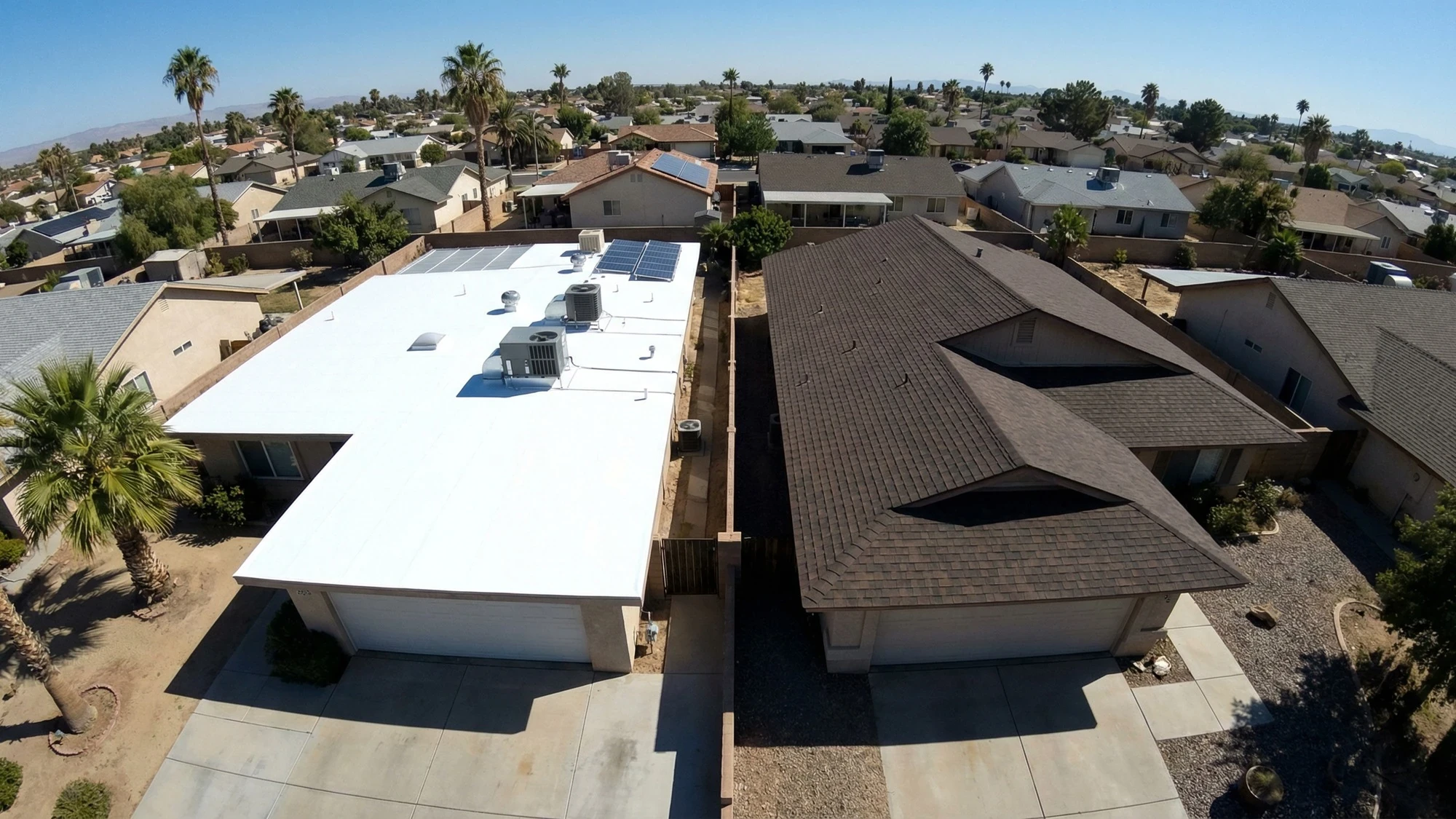
Pitched roofs have a noticeable slope — typically anywhere from a 3:12 pitch (3 inches of rise per 12 inches of run) to 12:12 or steeper. Most residential homes in the U.S. use pitched roofs with asphalt shingles, clay tile, concrete tile, or metal panels.
Flat roofs aren’t perfectly flat — they maintain a minimal slope (usually ¼” per foot) for drainage, but they appear flat from the ground and require different waterproofing systems than sloped roofs. They’re common on commercial buildings, modern residential designs, and additions.
Flat Roof Advantages
Lower Construction Cost
For new construction, a flat roof structure is simpler and uses less framing material than a pitched roof. On commercial buildings especially, the cost differential can be significant.
Accessible Roof Space
Flat roofs can double as usable space — HVAC equipment, solar panels, rooftop decks, and green roof systems are all more practical to install and access on a flat surface.
Easier Installation and Repair
Flat roof systems are generally faster and simpler to install than complex pitched roof systems with valleys, hips, and multiple penetrations. Repairs are also more accessible since the surface is walkable.
Flat Roof Disadvantages
Drainage Challenges
Water must be actively directed to drains or scuppers on a flat roof. Clogged drains cause ponding water — and standing water is flat roofing’s primary enemy. In Southern California’s desert climate, debris accumulation from wind and the occasional heavy rain event creates real drainage management demands.
Shorter Lifespan
Most flat roof systems have a lifespan of 15–25 years. TPO and EPDM membranes typically last 20–25 years with proper maintenance; modified bitumen systems typically 15–20 years. This compares to 25–50 years for quality pitched roof systems.
Higher Maintenance Frequency
Flat roofs require more regular inspection and maintenance — typically twice yearly — to stay ahead of seam failures, membrane shrinkage, and drain blockages.
Pitched Roof Advantages
Natural Water Drainage
Gravity does the work on a pitched roof. Rainwater flows off naturally without relying on drains to be clear and functional. In Southern California’s pattern of short, intense rain events, this is a meaningful advantage.
Longer Lifespan
A quality asphalt shingle roof lasts 25–30 years in temperate climates (somewhat less in the High Desert’s UV intensity). Tile roofs last 50 years or more. Metal roofing can exceed 40–50 years.
Attic Space and Insulation
Pitched roofs create attic space that serves as a thermal buffer, improving energy efficiency when properly insulated and ventilated. This matters significantly in the High Desert’s temperature extremes.
Pitched Roof Disadvantages
Higher Initial Cost
More complex framing, more surface area, and labor-intensive installation on steeper pitches mean higher upfront cost compared to equivalent flat roof construction.
Limited Rooftop Access
Equipment placement, solar arrays, and rooftop access are more complex on pitched roofs and may require additional structural consideration.
What’s Right for Your Project?
Residential homes: Pitched roofs remain the standard for residential construction in the High Desert. The long lifespan of tile and premium shingle products, combined with natural drainage, makes them the practical choice for most homeowners.
Commercial buildings and additions: Flat roofing systems — particularly TPO membranes for energy efficiency — are appropriate for commercial applications and flat-section additions where pitch isn’t structurally practical.
Modern residential designs: Some contemporary residential designs incorporate flat or low-slope sections. These require proper membrane roofing systems and closer maintenance attention than standard pitched sections.
Chaparosa Roofing installs both systems. We’ll give you an honest assessment of what makes sense for your specific structure and how to maximize the lifespan of either choice. Schedule a free consultation.