Commercial Roofing
Commercial Roofing Contractors Near Me — What to Look for in the High Desert
June 9, 2025 · Chaparosa Roofing · 4 min read
Commercial and residential roofing look similar from the outside but are fundamentally different specialties. The materials, installation techniques, code requirements, and contractor qualifications differ significantly — and hiring a contractor without the right commercial experience can create expensive problems.
What Makes Commercial Roofing Different
Roofing Systems
Most commercial buildings use flat or low-slope roofing systems: TPO, EPDM, modified bitumen, built-up roofing (BUR), or spray polyurethane foam (SPF). These systems require completely different installation knowledge than shingle or tile work. A residential roofer who “does some commercial work” may lack the training required to properly install and seal a membrane system.
High Desert commercial buildings also commonly use metal panel systems on industrial buildings and some office parks. Metal commercial roofing has its own fastening, flashing, and thermal movement requirements.
Code and Permitting Complexity
Commercial roofing projects typically involve:
Title 24 energy code compliance (California)
Occupancy classification requirements
Wind uplift design requirements based on building height and location
Potentially fire-spread ratings based on building type
Special inspection requirements on some projects
A contractor unfamiliar with commercial code requirements may complete a job that fails inspection or creates liability exposure.
Scale and Business Continuity
Commercial projects — particularly on occupied buildings — require coordination to minimize disruption. Phased work, roof access scheduling around business hours, and protecting interior operations from dust and moisture during a tear-off are all considerations that don’t apply to residential work.
Warranty Structure
Commercial roofing manufacturers offer system warranties — where the manufacturer guarantees the entire installed assembly, not just the material. Qualifying for a 15- or 20-year NDL (No Dollar Limit) warranty typically requires the contractor to be specifically certified by that manufacturer for that system type.
What to Look for in a Commercial Roofing Contractor
1. Specific commercial experience Ask for references from commercial projects of comparable type and size. Retail strip centers, industrial warehouses, office parks, and institutional buildings each have their own requirements.
2. Manufacturer certifications For membrane roofing (TPO, EPDM, modified bitumen), ask whether the contractor holds manufacturer certification. Companies like Carlisle, Firestone, GAF Commercial, and others certify contractors who meet their training and installation standards. Without certification, you may not be able to get a manufacturer-backed warranty.
3. CSLB license verification California requires all contractors performing work over $500 to hold a CSLB license. Verify the contractor’s license number at contractors.cslb.ca.gov. Commercial work also requires adequate general liability insurance — ask for a certificate naming your business as an additional insured.
4. Local code familiarity San Bernardino County and City of Victorville, Apple Valley, and Hesperia each have building departments with their own requirements. A contractor who regularly works in the High Desert understands local jurisdiction requirements and has established permit-pull relationships.
5. Written proposal specificity A commercial roofing proposal should specify: the exact membrane or roofing system being installed, manufacturer and product line, insulation R-value if applicable, drainage design, flashing details at all penetrations and edges, warranty coverage, and the specific work included in the base price vs. allowances.
Common Commercial Roofing Systems in the High Desert
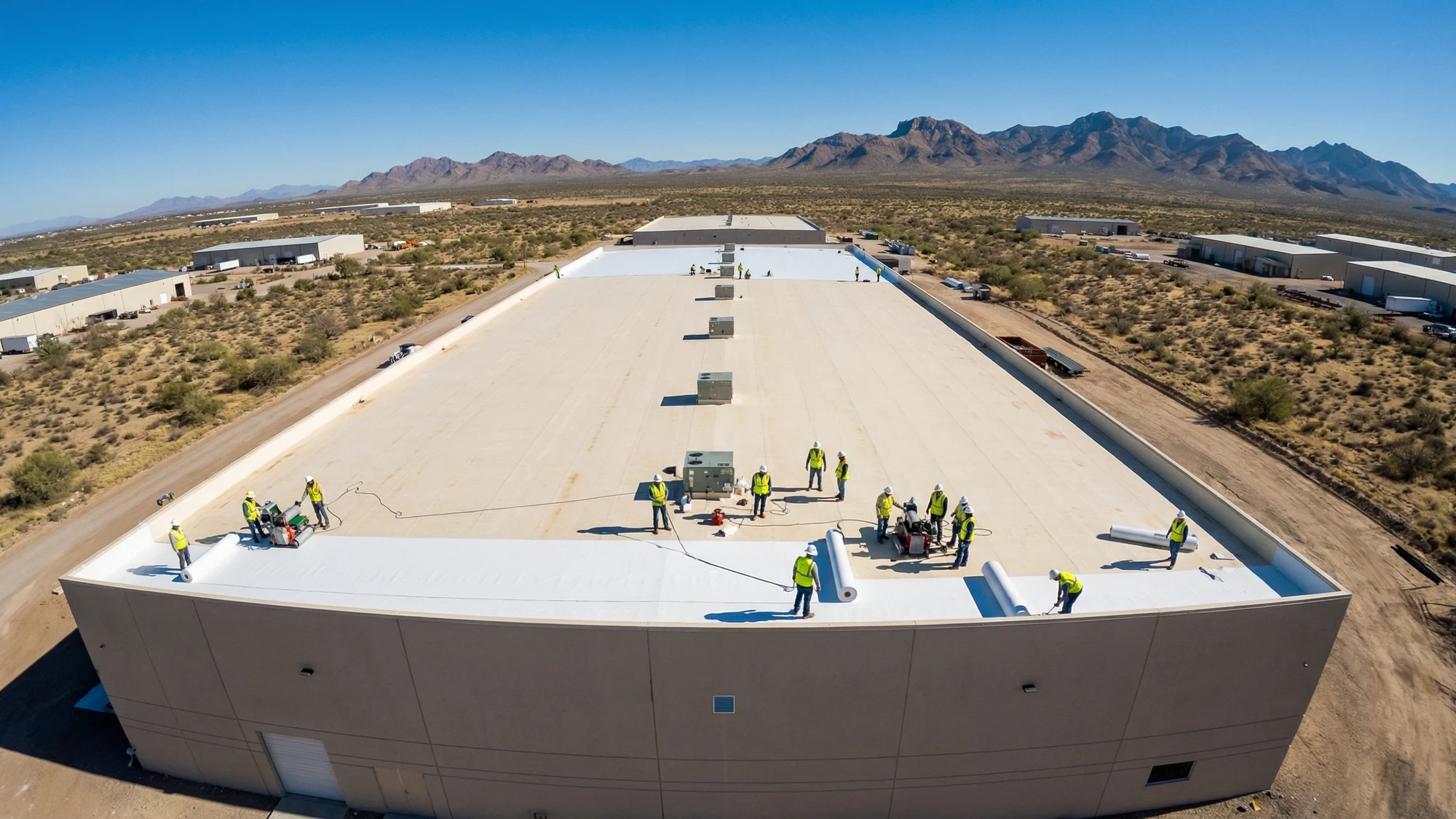
TPO (Thermoplastic Polyolefin) The most widely specified single-ply membrane system for commercial flat roofs. White or light-colored TPO reflects solar radiation, reducing cooling loads — a significant benefit in the High Desert’s intense summer heat. Heat-welded seams create a monolithic membrane with high long-term reliability.
EPDM A rubber membrane that performs well in temperature extremes. Black EPDM absorbs heat (less energy-efficient in SoCal), though white-coated versions are available. Seams are typically adhered rather than welded and require maintenance attention.
Modified Bitumen A multi-layer system using modified asphalt with a reinforcing mat, applied by torch or cold adhesive. Common on re-roofing projects where existing built-up roofing is present. More familiar to general contractors than single-ply systems.
Spray Polyurethane Foam (SPF) Applied as a liquid that expands into a seamless insulating foam and then receives a protective coating. No seams means no seam failure points. Commonly used for restoration of existing flat roofs and on irregular surfaces with equipment curbs and penetrations.
Chaparosa Roofing Commercial Services
Chaparosa Roofing has served High Desert commercial clients since 1969. We hold manufacturer certifications for TPO and modified bitumen systems, carry $2 million in general liability coverage, and work with building owners and property managers on phased maintenance programs that protect both their buildings and their operations.
Contact us for a commercial roofing evaluation — we provide detailed written proposals with system specifications, warranty options, and phased work scheduling.


